A
BIBLICALLY WHOLISTIC
APPROACH TO HEALTH MISSIONS
GLOBAL
HEALTH MISSIONS PRE-CONFERENCE
NOVEMBER 11, 2004

TABLE OF CONTENTS:
LAUSANNE CONFERENCE OCTOBER 2004
| HOLISTIC MISSION: THE CHURCH AND HEALTH |
| LAUSANNE OCCASIONAL PAPER: HOLISTIC MISSION |
HEALTH AND WHOLENESS FOR THE 21ST CENTURY CONFERENCE OCTOBER 2003
Holistic
Mission: The Church and Health
Wheaton College
Evvy Hay Campbell Email: Evvy.Campbell@Wheaton.edu
|
Of all areas of great human need, health is possibly the most profoundly compelling. Dry skin forms a puckered tent on the abdomen of a dehydrated child carried into a mission clinic. A cry of grief from a young Thai woman reverberates in the counseling center as she learns that her new husband is HIV positive. The hand and umbilical cord of a child protrude from the womb of a village woman, carried in too late to a maternity center. The chasm between the rich and poor grows with 1.3 billion people living on less than one dollar per day. Today’s six billion people may be ten billion in 2100 with most in crowded urban centers, lacking the resources and knowledge to deal with inadequate food, unsafe water, and disease. What, then is the response of the church? On what foundations and understandings, under what mandate and in what manner, can its people—who worship and serve the God of hope—be effective light and salt with regard to holistic healthcare in this generation? Biblical
Foundations Regarding Health God’s
Vision for Health In Western thought the word health “conjures up the vision of a robust physical stature” while the far broader biblical perspective concerns wholeness or harmony “between body, mind and spirit, between the individual and others, and between the individual, nature and God.” E. Anthony Allen, a psychiatrist and theologian who worked in Kingston, Jamaica with the community whole-person health program of Bethel Baptist Church, told of the confusion he experienced as a medical intern when “health” applied to the clinical setting and “salvation” belonged only in “church.” He argued that health is not simply the absence of disease but “a maximum quality of life called wellness.” Wholeness does not come by treating (i.e. acting upon an organism but rather by healing in which relationships are made whole with self, God, community, and nature. In Western Christianity, salvation has been spiritualized and llimited to repentance, forgiveness, accepting Christ’s sacrifice for our sins, moral transformation, and striving toward moral perfection. As a result, “The body is left to the doctor; the mind, to the psychologist; the soul to the church’ and the socioeconomic to the social scientists and politicians.” Allen concluded his argument by saying that salvation refers to total transformation and since healing is total transformation they are then one and the same, or two sides of the same coin. Health
in the Old Testament Biblical
Terms Related to Health In addition to yeshuwah, the other Hebrew word that references physical health is shalom, commonly translated as “peace,” but with a meaning broader than that word has in English. In Malachi 2:5 God’s covenant is described as one of “life and shalom.” Shalom is the wellbeing that results when people are in right relationship both with each other and with God, and it includes social justice. Health, for the Jews, was a positive quality present when people had harmony personally, with other people, and with God. Jeremiah indicated that shalom is dependent on moral righteousness and described as false prophets those who say: “Peace, peace [shalom, health] …when there is no peace.” (Jeremiah 6:14b. Indeed, the Messiah is the Prince of Shalom. Importantly, because shalom included physical, social, and spiritual wholeness, Tony Atkins stated that the pursuit of health in a society without Christ is futile. Beyond survival and rehabilitation, as vital as those are, shalom/salvation embraces “the totality of human life,” While shalom will only be perfectly fulfilled in the Kingdom of God at the end of the age, Christians involved in healthcare nevertheless live and work in the light of that vision. Further, in societies impacted by the physical/spiritual dichotomy of the Enlightenment, shalom is both the bridge that communicates the connections between evangelism and development and the key to understanding holism. There are two pitfalls to avoid when discussing health. The first is mediocentrism, the belief that Western scientific medicine has the only truth with regard to health and illness questions. One examples of mediocentrism is the doubt that any authentic cures can take place outside of the Western scientific framework. The second pitfall is unreflectively adopting non-Christina values in health ministries. Health ministries need to be grounded in biblical values: viewing humans as made in the image of God, understanding that wholeness in life is communal—as modeled in the church, and seeking the Kingdom of God and its justice by treating all with dignity “as image bearers of God.” Principles
that form the foundation for health and medical practice, and which
have been widely accepted in Christian circles, include: 1) All healing
is of God and is the expression of the Creator’s redemptive energy.
2) Faith is at the center of health, and health involves the whole body,
mind, spirit, and personality in purposeful living. 3) Health can only
be Root
Causes of Health Problems E. Anthony Allen cautioned to not overlook, as causes of health problems, an individual’s sins of lust, envy, avarice, hatred, deceit, and idolatry of materialism; nor to overlook the evils in the socio-political systems of the world. Racism, unbridled capitalism, and rightist fascism impact health as well. Contrasting the impact on health of the fruit of the Spirit versus the acts of the sinful nature (Galatians 5:19-23) is one of many scriptural eye-openers on the root causes of ill health, both personal and societal. The
Biblical Mandate for Health Ministries Because “reflection on medical mission followed rather than preceded the establishment of medical missions” and “all participants in the discussion sought either to impede or advance what was already in place” it is not surprising that agreement on a mandate for health ministries has been elusive. The most compelling motif, however, may be the “imitation Christi” (I Corinthians 11:1, and I Thessalonians 1:6) in which Paul advised others to imitate him as he imitated Christ. Underlying this, and not to be divorced from it, is the way in which healing correlates with redemption. In the Judeo-Christian tradition healing is the “personal and bodily expression of God’s ongoing creation (creation continua) …and a token of God’s desire to restore humans to what they ought to be.” Thus, healing as “a potential encounter with redemption/creation” requires that the gospel be proclaimed. Christoffer Grundmann argued that, “Proclaiming the gospel by healing the sick distinguishes the unique ministry of Jesus Christ. Proclaiming the gospel in imitation of him is the ongoing challenge for genuine Christian mission.” In God’s economy loving our neighbor is coupled with the greatest commandment of loving God himself (Matthew 22:37-39). Healing
in the New Testament The commission of Jesus to the disciples in Mark 16:15-20 included laying hands on the sick who then recovered. In the first apostolic miracle Peter healed a man over forty years old who had been lame from birth (Acts 3:1-11). Such events brought a multitude of people who were afflicted or tormented by evil spirits “and all of them were healed” (Acts 5:16 NIV). Historic
Ministry Models The
Early Church Why do we not observe that it is their benevolence to strangers, their care for the graves of the dead and the pretended holiness of their lives, that have done most to increase atheism? (He often refers to Christians as Atheists.) I believe that we ought really and truly to practice every one of these virtues….For it is disgraceful that, when no Jew ever has to beg, and the impious Galileans support not only their own poor but our [sic] as well, all men see that our people lack aid from us. Teach those of the Hellenic faith to contribute to public service of this sort. In 256 A.D., when there was an epidemic of bubonic plague in Alexandria, Christians stayed behind to care for the sick and dying rather than fleeing from the city. Many lost their own lives in doing so. The majority of missionaries from the fourth century until the Reformation were Benedictines, Celts, Dominicans, Franciscans, Jesuits, Nestorians, and Orthodox monks. Translation of scripture resulted in the development of alphabets, written languages, and literacy work. The Cistercians cultivated land, developed methods of agricultural administration and became significant wool produces in Europe. In relation to health, confraternities affiliated with churches provided hospital, burial, and insurance services for members and many monasteries had affiliated leper asylums and hospitals. According to the Benedictine Rule the sick were to receive attention. Xenodochia, for example, were accommodations that bishops were directed to provide for the destitute. Basil the Great established one such facility in 372 A.D., though the majority of them provided only shelter, food, and some amenities. In the sixth and seventh centuries a small number of xenodochia had trained physicians who cared for the sick. Various religious orders were later established specifically to care for the ill: the Order of St. John of Jerusalem (1113 A.D.), the Hospitaller of St. John of God (Do Good Brothers, 1540 A.D.), and the Bethlehemites in Mexico (1667 A.D.). During those centuries documents indicate there were at least 326 homes for those with leprosy in Britain and 2,000 in France, with nearly all supported by Christians. The
Era of the Reformation At that time in Europe some thought social needs should be dealt with through ideal societies, which “drew their inspiration largely or in part from Christianity.” John Calvin felt the state should be “dominated by the religious idea” and Oliver Cromwell “strove to constrain the realm to conform to Christian ideas” though neither Luther nor Calvin felt that the previous system of almsgiving, which had been extensive, was adequate to address the complex social problems of their day. Partnership of word and deed was modeled by the Puritans, Pietists, Moravians, and Wesleyans. Puritan missionary John Eliot served the Algonquin Native Americans by helping them secure land use, taking cases to court on their behalf, establishing schools, and translating books. Pietist A. H. Francke established an orphanage and schools for the poor that uniquely welcomed girls as well as boys. The Moravians, both highly evangelistic and skillful farmers, worked in Greenland, the West Indies, Europe, and on the western frontier of North America. In England John and Charles Wesley worked tirelessly to abolish slavery in the British Empire. The eighteenth century evangelical revival resulted in increased care for the poor. John Wesley set up loan funds and established medical clinics to aid the poor. He opened a free dispensary in 1745 for the poor, the first of its kind, and the following year published Primitive Physic which gave health advice to those who could not pay to see a doctor. Between 1700 and 1825 there were 145 new hospitals established from individual and coordinated voluntary efforts. While living in India from 1793 to 1834, William Carey campaigned 25 years against the practice of sati or widow burning until its abolition, advocated human treatment for people with leprosy, initiated savings banks to combat usury, established the Agri-Horticultural Society, and began the first college in Asia at Serampore. Between 1867 and 1893 China Inland Mission (CIM) was involved in both church planting and social services. CIM had 28 shelters for the cure of opium addicts, 16 dispensaries, and 7 hospitals, as well as 29 day schools and 11 boarding schools. The
Centuries of Medical Missions Between 1850 and 1950 Britain alone sent more than 1,500 medical missionaries to the developing world. The Salvation Army Nurses’ Fellowship, which originated in the London blitz of the Second World War, grew rapidly into an international organization. Its midwives, who traveled by foot, paddleboat, and bicycle were paid with “a love-gift of an egg, or a posy of wild flowers, or maybe a handful of grain.” Dr. Carl Becker spent 50 years in the Congo and was revered for his compassionate treatment of residents at a 1,100-acre leprosy village. Dr. Stanley Brown, a young man from a modest south London home with an encyclopedic memory, became renown for his work in leprosy prevention and control. During the civil war in Congo, Dr. Helen Roseveare suffered physical assault from Simba Rebels at the Nebobongo mission where she worked and Dr. Paul Carlson at the Wasolo mission station in the Ubangi Province of Congo was captured, tortured, and finally killed in the streets of Stanleyville. Nineteenth century missionary societies formed in Europe and Great Britain held evangelism and indigenous education as their highest priorities and advocated that medical missionaries were “to be first preachers, then medical men, if time remained for that.” Rev. Peter Parker, a Yale College graduate, also completed studies for his medical degree before going to China. His charge on departure in 1834, from the American Board of Commissioners for Foreign Mission (ABCFM) was to use his skills as a physician “only as they can be made handmaids to the gospel.” Parker opened an “Ophthalmic Hospital” and later helped organize the first Medical Missionary Society. Displeased at such a full engagement in the medical work, the ABCFM discontinued Parker’s financial support in 1845. Parker worked on independently. After his retirement the ABCFM made amends by making Parker a corporate member of the board. Ultimately, at the World Missionary Conference at Jerusalem in 1928, a statement of “The Place of Medical Missions in the Work of the Church” was adopted, stating that “in the missionary enterprise the medical work should be regarded as, in itself, an expression of the spirit of the Master, and should not be thought of as only a pioneer of evangelism or as merely a philanthropic agency.” In the nineteenth century, Protestant missionaries were commonly evangelists or church planters who secondarily engaged in social ministries. In the twentieth century, however, technological and scientific advances increasingly resulted in specialization in mission, including linguistics and translations, aviation, radio broadcasting, and medical missions. Specialists
engaged in missions have commonly plunged directly into their tasks
on arrival without adequate time for study of the language and culture,
often rendering them ineffective in areas other than professional tasks.
Further, in cases where preparatory biblical and theological training
have not been required, there have often been lesser skills for nurturing
new believers and establishing them in fellowships. The 1978 International Conference on Primary Health Care, held in Alma-Ata (now Almaty, Kazakhstan), turned the attention of the global health community to healthcare at the community level. Primary health care was defined as accessible, acceptable, affordable care linked to community initiatives. Recognition was given to the need for prevention and control of endemic diseases, maternal/child healthcare, adequate nutrition and sanitation, and appropriate rehabilitative services, as well as health promotion and curative services. Importantly, an emphasis was placed on inter-sectoral coordination with departments of agriculture, housing, communication, and public works. Subsequent to the conference, the Christian relief and development agency MAP International and the Christian Medical Society facilitated the development of a declaration by mission and medical ministries policy-makers to shift attention from hospital-based to community-based ministries. In Mission and Ministry: Christian Medical Practice in Today’s Changing World Cultures, David Van Reken said that medical missions had passed from the pioneering phase of doing through an era of teaching—marked by the founding of training schools—to a period of enabling, characterized by national leadership and ownership and focusing on community development and sustainable indigenous growth. In the 1990s three key publications highlighted cases of holistic health ministries, reflecting on them from theological, social, and management perspectives, and then identifying trends and considerations for the future. The first was D. Merrill Ewert’s A New Agenda for Medical Missions (1990), the second Eric Ram’s Transforming Health: Christian Approaches to Healing and Wholeness (1995), and the third the Serving with the Poor (Asia, 1995; Africa, 1996; Latin America, 1997; Urban, 1998) series coordinated by Tetsunao Yamamori. Common themes in the very diverse initiatives described included a focus on community-based health that gives people the power to address their own problems, partnering with the church, an emphasis on sustainable transformation, facilitators who excel both in professional skills and Christian character, the necessity of practitioners living incarnationally, and the imperative of a biblical worldview with regard to health and God’s vision of the future. Contemporary
Health Ministries Church-based
Health Care An
Emphasis on Capacity Building Training
in Context Self-supporting
Initiatives Recruiting
Christian Doctors for Mission Work Integrated
Health and Development Programs Issues Confronting the Church Both recurrent and new challenges face the church with regard to global health. Injustice, armed conflict, recurrent as well as emerging health threats, and the enormous problem of HIV/AIDS all require a response. Injustice
and Inequality of Opportunity Armed
Conflict Having experienced almost four decades of armed conflict, Angola is now experiencing large population migrations. Some 450,000 refugees are returning, with many coming from areas with high prevalence rates of HIV. Prevention initiatives and voluntary testing centers are scarce and knowledge of HIV/AIDS transmission is limited. Myanmar, in the grip of a civil war since the end of World War II, has a battered public health system and a piecemeal response to AIDS. Ethnic minorities, such as the Kachin, Chin, Karenni, and Karen, have been regularly terrorized by the brutal Burmese State Peace and Development Council (SPDC). Houses, schools, churches, and clinics have been routinely burned. Rape has been a weapon of war, with 625 documented in Shan state alone between 1996 and 2001. Of those, 61 percent were gang rapes and 83% were carried out in front of their troops by army officers. The Sa Sa Sa terror squad of the Burma Army has beheaded villagers and then displayed the heads. All wars leave orphans, widows, refugees, and the disabled. Following relief efforts, enormous tasks remain for those concerned with the long-term impact on health.
Equally ominous in the developing world are the rapidly growing epidemics of injury and death from road traffic accidents, cardiovascular disease, and the use of tobacco products. The five million who died in 2003 as part of the tobacco epidemic were largely the poor in poor countries. No single problem, however, has equaled the massive devastation caused by HIV/AIDS. HIV/AIDS Sub-Saharan
Africa Women in Africa are 1.2 times more likely to be HIV-positive than men because the virus is more easily transmitted male to female, women become sexually active earlier than men, and they are more likely to have older partners. With less than 2% of the world’s population, Southern Africa has 30% of the world’s population living with AIDS. Prevalence of HIV is relatively low in North Africa and the Middle East, with the exception of Southern Sudan, which has a heterosexual epidemic. Asia
and Eastern Europe Commercial sex and injecting drug use have spurred the epidemic in Asia and the Pacific. Thailand, Cambodia, and Myanmar currently have serious epidemics. In Myanmar migrant workers, particularly loggers and gem miners, have spread the virus in the larger population. India’s National AIDS Control Organization reports that AIDS is spreading from urban and vulnerable populations to the rural areas and larger population. Injecting drug use has been the chief propellant in Indonesia’s epidemic and in Thailand and Cambodia, countries with older epidemics, there is now significant new spread of HIV from those with high-risk behaviors to their sexual partners. In China three provinces have had whole villages infected with AIDS as a result of serving as registered stations for the selling of blood in the 1990s. Latin
America and the Caribbean Europe On many fronts the church has played a significant role in response to AIDS. One of the early initiatives was a 1994 All Africa Church and AIDS Consultation held in Kampala, Uganda. Representatives of twenty-eight African countries and delegates from Asia, Europe, and the Americas attended. From that came a declaration regarding the role of the church and an articulation of its mission in response to HIV/AIDS. Importantly, it saw HIV/AIDS as an opportunity for the church: to share the message of repentance that leads to forgiveness, to respond to the call to sacrifice, and to be involved in prophetic, priestly, and pastoral roles. The Ethiopian Evangelical Church Mekana Yesus has had HIV/AIDS prevention and control programs for more than a decade, with such elements as creatively hosting song and poem competitions as well as dramatic performances in churches. Judah Trust in the United Kingdom has promoted a network of prayer support for grass-roots Christian organizations responding to HIV/AIDS through its monthly AIDS Intercessors Newsletter. International NGOs such as the Salvation Army, World Vision, World Relief, and World Hope have variously partnered with local churches in home care, AIDS Orphan Trusts, income generation for families with HIV/AIDS, pastoral counseling, support of institutions caring for the sick, and prevention initiatives. Grounded in communities and bearing a message of hope, churches are eminently suited to respond to HIV/AIDS. The comprehensive Life at the Crossroads materials, birthed out of the “Why Wait?” materials and Campus Crusade for Christ in Malawi, have been effectively used in numerous countries. Yet those engaged with the church in response to HIV/AIDS are invariably the first to say that Christians and the church have not done enough. The church has been silent about sexuality and AIDS, extended judgment rather than compassion to those affected, and done little to care for widows, orphans, and those who die. Beyond an opportunity, AIDS is a crucible for the church, revealing the extent of commitment and care for which Christians will one day be accountable. The hungry, thirsty, alien, those lacking clothing, and prisoners of Matthew 25 are the stigmatized, homeless, orphaned, widowed, and impoverished of the HIV/AIDS pandemic and Christians stand in judgment if we do not respond to the least of these. But in the darkest places there are still lights of hope. An aging grandmother in Zambia, who had lost her four children and their spouses to AIDS, cared for their eight orphans. A falling tree had crushed her kitchen shelter, she walked two kilometers for water, and her latrine had collapsed. Then the Women of the Mukinge Orphan Support Group came to her aid. They cleaned her compound and paid someone to dig a new latrine. They provided blankets, clothing, and transportation for the family and encouraged other church members and neighbors to help as well. In 1998 the ten Mukinge women organized knitting groups to make blankets for orphans. They later engaged in income generating projects to develop a source of revenue and by 2002 were supporting 90 orphans in five communities with school fees and uniforms. They have also sought to know each child personally and share the love of Christ with “orphans and widows in their distress” (James 1:27). The
church has responded in both the past and present to injustice, the
consequences of armed conflict, and diseases both historic and emerging.
Much more, however, remains to be undertaken. Promote
a Comprehensive Biblical Understanding of Holistic Health How can we promote a biblical understanding of holistic health and the mandate for health ministries? Some
suggestions for maximizing the impact of holistic mission on the body
of Christ include: Focus
on Transformation What needs to be done to create a vision for transformation in communities? Emphasize
Primary Care and Strengthen Health Systems In what ways and to what extent can the church partner with other entities to strengthen primary care and health systems? Develop
Practitioners Who Are Committed Disciples of Christ 1.
How do we reach, disciple, and mobilize healthcare workers who are Christians
in order to expand the number of them who are active in the Great Commission? How do we join efforts, as the body of Christ, in fighting against the major world killers: famine, hunger, malnutrition, malaria, tuberculosis, HIV/AIDS, and disparity in access to health care? (Oscar Chicas, World Vision International, Honduras) Strengthen
our Response to HIV/AIDS 1.
What unique contributions can the local church give to the community
AIDS crisis and how can this role be appropriately encouraged and supported
by church leadership, church members, and the international body of
Christ? Engage
in Research and Advocacy In what ways, and to what extent, can the church be encouraged to engage in research and advocacy with regard to health? Undertaking
Our Assignment… Endnotes Carter,
Jimmy. (2002). Challenges for Humanity. National Geographic. 201:2.
2. Scripture
references, unless otherwise indicated, are from: Coleman, Lyman et.
al. (Eds.). The NIV Serendipity Bible for Study Groups, 2nd Edition.
Grand Rapids, MI: Zondervan. |
Lausanne
Occasional Paper: Holistic Mission
C. René
Padilla
|
There is general consensus among evangelical Christians all over the world that the church is by nature missionary. But what does that mean? How is the mission of the church defined? What all is included in mission? Can mission be circumscribed to transcultural missionary efforts for the sake of the planting of churches in “the regions beyond”? Should mission be identified with evangelism understood as “the proclamation of the historical, biblical Christ as Savior and Lord, with a view to persuading people to come to him personally and so be reconciled to God”? (Stott 1996:20). Or should mission be equated with social transformation resulting from God’s action in history through human agency, which may or may not include the church, as has often been advocated in ecumenical circles? No attempt can be made to answer these questions adequately within the confines of this paper. Enough can be said, however, to account for the description of mission as holistic, and to illustrate in practical ways this important concept: a concept that has become increasingly accepted among evangelicals, especially in the Two-thirds World, since the International Congress on World Evangelization, held in Lausanne, Switzerland, in 1974. What is
Holistic Mission? I believe that, with regard to the great tensions between the vertical interpretation of the gospel as essentially concerned with God’s saving action in the life of individuals, and the horizontal interpretation of it as mainly concerned with human relationships in the world, we must get out of that rather primitive oscillating movement of going from one extreme to the other, which is not worthy of a movement which by its nature seeks to embrace the truth of the gospel in its fullness. A Christianity which has lost its vertical dimension has lost its salt and is not only insipid in itself, but useless for the world. But a Christianity which would use the vertical preoccupation as a means to escape from its responsibility for and in the common life of man is a denial of the incarnation, of God’s love for the world manifested in Christ. (Goodall 1968:317-318) The same aspiration for a more comprehensive view of mission became evident in evangelical circles as early as 1966, at the Wheaton Congress on the Church´s Worldwide Mission co-sponsored by the Evangelical Foreign Missions Association (EFMA) and the Interdenominational Foreign Missions Association (IFMA). Since then it grew consistently throughout the years to such an extent that by the time of the Lausanne Congress, the statement could be made in paragraph 5 of the Lausanne Covenant that Although reconciliation with man is not reconciliation with God, nor is social action evangelism, nor is political liberation salvation, nevertheless we affirm that evangelism and socio-political involvement are both part of our Christian duty. For both are necessary expressions of our doctrines of God and man, our love for our neighbor and our obedience to Jesus Christ. The message of salvation implies also a message of judgment upon every form of alienation, oppression and discrimination, and we should not be afraid to denounce evil and injustice wherever they exist. When people receive Christ they are born again into his kingdom and must seek not only to exhibit but also to spread his righteousness in the midst of the unrighteous world. The salvation we claim should be transforming us in the totality of our personal and social responsibilities. Faith without works is dead. (Stott,1996:24) Such a statement makes clear that, as Rodger C. Bassham has pointed out, the Lausanne Congress “produced some marked changes in evangelical mission theology.... through broadening the focus of the Congress from evangelism to mission” (1979:231). These “marked changes in evangelical mission theology” are well illustrated by the “change of mind” that the well-known British writer and speaker John Stott experienced between the Berlin Congress (1966) and the Lausanne Congress. In his opening address on “The Biblical Basis of Evangelism” (Douglas 1975:65-78) at the memorable 1974 Congress, the well-known British author claimed that “the mission of the church arises from the mission of God” and should, therefore, follow the incarnational model of Jesus Christ (66-67). On that basis he argued that “mission... describes everything the church is sent into the world to do,” as those who are sent by Jesus Christ even as the Son was sent by the Father, that is, “to identify with others as he identified with us” and to serve as “He gave himself in selfless service for others” (67-68). In his expanded version of the Lausanne address published in 1975 under the title Christian Mission in the Modern World, Stott candidly confessed that at the 1966 Congress he had sided with the many who, from the emphasis that most versions of the Great Commission give to evangelism, deduce that “the mission of the church... is exclusively a preaching, converting and teaching mission.” Then he added: Today, however, I would express myself differently. It is not just that the commission includes the duty to teach converts everything Jesus had previously commanded (Matthew 28.20), and that social responsibility is among the things which Jesus commanded. I now see more clearly that not only the consequences of the commission but the actual commission itself must be understood to include social as well as evangelistic responsibility, unless we are to be guilty of distorting the words of Jesus. (1975:23) The affirmation that “the actual commission itself must be understood to include social as well as evangelistic responsibility” seems to suggest a real integration of the vertical and the horizontal dimensions of mission, which is at the very heart of holistic mission. This approach, however, did not become part and parcel of the Lausanne Covenant, which in paragraph 6 qualified paragraph 5 by stating that “the church’s mission of sacrificial service evangelism is primary” (Stott 1996:28), thus supporting the two-mandate approach to mission-evangelism and social action. In contrast, the holistic approach was forcefully expressed by the so-called Radical Discipleship group, an ad hoc group of about four hundred participants who met spontaneously during the Congress. Their document on “Theological Implications of Radical Discipleship” (Douglas 1975:1294-1296), which may be regarded as the first world-wide evangelical statement on holistic mission, affirms, among other things, that There is no biblical dichotomy between the Word spoken and the Word made flesh in the lives of God’s people. Men will look as they listen and what they see must be at one with what they hear. The Christian community must chatter, discuss and proclaim the Gospel; it must express the Gospel in its life as the new society, in its sacrificial service of others as a genuine expression of God’s love, in its prophetic exposing and opposing of all demonic forces that deny the Lordship of Christ and keep men less than human; in its pursuit of real justice for all men; in its responsible and caring trusteeship of God’s creation and its resources (1294). This definition of holistic mission as including what the church is, what the church does, and what the church says can hardly be improved. The atmosphere generated by the Lausanne Congress has been described as “euphoric,” particularly for relief and development workers who “could now appeal to the evangelical constituency as family, without the fear of either being rebuked for preaching the ‘social gospel’ or being charged of compromising on evangelism” (Samuel & Sugden 1987:ix). It must be said, however, that after the Lausanne Congress the holistic approach to mission was very much under pressure in conservative evangelical circles. Thus, for instance, the Consultation on World Evangelization (COWE), held in Pattaya, Thailand, in 1980, under the sponsorship of the Lausanne Committee on World Evangelization (LCWE), led many observers to ask how seriously the organizers had taken the statement made in the Lausanne Covenant on the importance of both evangelism and social responsibility. Their concern was voiced by Waldron Scott in the following terms: It seems unlikely... that the Lausanne Committee will be a major force in the 1980s for promoting a style of evangelism based on a holistic theology and a clear-sighted vision of the definitive contextual realities of the decade. Within evangelical circles we will have to look to groups other than LCWE for leadership along these lines. (Quoted by Costas 1982:154) In spite of all the resistance to a holistic approach to mission, the position expressed by the Radical Discipleship group in 1974 was echoed in various important documents drafted in the eighties, including the following three: 1. The “Statement on Simple Lifestyle,” which came out of the Consultation on this topic, held in Hoddesdon, England, in March 1980, convened by the LCWE Theology and Education Group and the Ethics and Society Unit of the World Evangelical Fellowship. 2. The
“Statement of Concern for the Future of the LCWE,” signed
by approximately two hundred participants at the Pattaya Consultation
of LCWE, in June 1980. After the Wheaton ‘83 Statement, no significant advance was made in evangelical circles with regard to the definition of holistic mission. This must not be interpreted, however, as a lack of interest in the subject. Rather, as a result of the amazing paradigmatic shift in the concept of mission which had taken place during the previous decade, the moment for the practice of holistic mission had arrived. Observers of this phenomenon could speak of a “rise in Christian conscience” leading to “the emergence of a dramatic renewal movement in today’s church” (Jim Wallis). Hundreds of Christian faith-based organizations were now engaged in God’s work everywhere, to such an extent that in 1983 it could be stated that “The proliferation of para-local church movements and organizations will be one of the distinguishing hallmarks of the last half of the twentieth century” (Jerry White quoted in Willmer, Schmidt and Smith 1998:xii). An outstanding illustration of the process of change in perspective which took place especially after the Lausanne Congress is the formation of the Micah Network, whose First International Conference was held in Oxford, England, in the aftermath of the terrorist attacks of September 11, 2001. The Micah Network has grown into a world-wide group of more than 200 evangelical Christian relief, development, and justice agencies. At the Oxford meeting Micah adopted, as a matter of practicality in network communication, a distinctive term to refer to the Biblical model of mission that it advocates, namely, “integral mission,” which was understood as pointing to “the proclamation and demonstration of the gospel.” It went on to explain that it is not simply that evangelism and social involvement are to be done alongside each other. Rather, in integral mission our proclamation has social consequences as we call people to love and repentance in all areas of life. And our social involvement has evangelistic consequences as we bear witness to the transforming grace of Jesus Christ. If we ignore the world we betray the word of God which sends us out to serve the world. If we ignore the word of God we have nothing to bring to the world. Justice and justification by faith, worship and political action, the spiritual and the material, personal change and structural change belong together. As in the life of Jesus, being, doing and saying are at the heart of our integral task. (Quoted from the Micah Declaration on Integral Mission, www.micahnetwork.org)
The first approach takes as its starting point the purpose of God, which embraces the whole of creation. The biblical message of salvation points towards “new heavens and a new earth,” and that means that we cannot view salvation as separated from creation. The purpose of salvation is not merely endless life of individual souls in heaven but the transformation of the totality of creation, including humankind, to the glory of God. A person’s conversion to Christ is the eruption of the new creation into this world: it transforms the person, in anticipation of the end time, in a wonderful display of God’s eschatological purpose to make all things new. This way of looking at conversion has important consequences for evangelism. The purpose of the proclamation of the good news of Jesus Christ is not to change people into religious individuals who cut themselves off from the world in order to enjoy the benefits of their salvation. Rather, the purpose of evangelism is to constitute communities that confess Jesus Christ as the Lord of the totality of life and live in the light of that confession; communities that do not only talk about God’s love but also demonstrate it in concrete terms, through good works which God prepared in advance for them to do (Eph 2:10). The second approach takes into account that the human being is a unity of body, soul, and spirit, which are inseparable. This view, which is taken for granted in both the Old and the New Testament, has been confirmed by modern science. Because the human being is a unity, one cannot properly help a person by taking care of his or her needs of one type (for instance, the need of God’s forgiveness, a spiritual need) but leaving completely aside his or her needs of another type (for instance. the material or bodily needs). James acknowledges this when he writes: “Suppose your brother or sister is without clothes and daily food. If one of you says to him, Go, I wish you well; keep warm and well fed, but does nothing about his physical needs, what good is it? In the same way, faith by itself, if it is not accompanied by action, is dead” (Js 2:15-17). From this perspective, holistic mission is mission oriented towards the satisfaction of basic human needs, including the need of God but also the need of food, love, housing, clothes, physical and mental health, and a sense of human dignity. Furthermore, this approach takes into account that people are spiritual, social, and bodily beings, made to live in relationship with God, with their neighbors, and with God´s creation. Consequently, it presupposes that it is not enough to take care of the spiritual wellbeing of an individual without any regard for his or her personal relationships and position in society and in the world. As Jesus saw it, love for God is inseparable from love for neighbor (Mt 22:40). To talk about “holistic mission,” therefore, is to talk about mission oriented towards the formation of God-fearing persons who see themselves as stewards of creation and do not live for themselves but for others; persons who are willing to fulfill their God-given vocation in the world and to receive and to give love; persons who “hunger and thirst for justice” and who are “peacemakers” (Mt 5:6, 9). The reduction of the Christian mission to the oral communication of a message of otherworldly salvation grows out of a misunderstanding of God’s purpose and of the nature of human beings. It is assumed that God wants to “save souls” rather than “to reconcile to himself all things, whether things on earth or things in heaven” (Col 1:20); that the human being only needs to be reconciled to God rather than to experience fullness of life. In the final analysis, this is a reduction related to ideas taken from Greek philosophy, not from Scripture. Mission is faithful to Scripture only to the extent to which it is holistic. In other words, it is faithful when it crosses frontiers (not just geographic but also cultural, racial, economic, social, political, etc.) with the intention of transforming human life in all its dimensions, according to God’s purpose, and of enabling human beings to enjoy the abundant life that God wants to give to them and that Jesus Christ came to share with them. The mission of the church is multifaceted because it depends on the mission of God, which includes the whole of creation and the totality of human life. The third approach to show the integration of the various elements involved in the mission of the church is the one that takes as its starting point the “Christ-Event,” including Christ’s life and ministry, his death on the cross, his resurrection, and his exaltation. Each of these events points towards integral mission as the means whereby the church continues Jesus’ mission throughout history, and whereby the redemptive work of Jesus takes effect under present circumstances. 1. The Life and Ministry of Jesus and Holistic Mission. The traditional tendency to separate the death of Jesus from his earthly life in order to give prominence to the cross has resulted in a sad lack of attention to the significance of his life and ministry for the mission of the church. Although it is true that the four Gospels emphasize the passion and death of Jesus, it is also true that what gives validity to the death of Jesus Christ as “the atoning sacrifice for our sins” (1Jn 4:10) is that it was the sacrifice of the perfect man, whose way of life established the foundations for the definition of what it means to love God above all things and to love one’s neighbor as oneself. His earthly life and ministry in this way came to be the model for the life and mission of the church. If that is the case, the proclamation of good news to the poor, the preaching of freedom for captives, of the recovery of sight for the blind, and the liberation of the oppressed is a basic criterion by which to assess how far the mission of today’s church was really the continuation of the mission of Jesus of Nazareth. As John Perkins says, the church is called to be “the replacement of Jesus in a given community, doing what he would do, going where he would go and teaching what he would teach.” 2. Jesus’
Cross and Holistic Mission. The cross represents the culmination of
Jesus’ surrender in submission to the will of God for the redemption
of humankind. “He made him to be sin who knew no sin, so that
in him we might become the righteousness of God” (2Co 5:21). This
is at the very heart of the gospel. However, the cross also represents
the cost of discipleship and of faithfulness to God’s call to
take part in bringing to fruition his redemptive purpose. The mission
of the church provides the link between the death of Jesus Christ on
the cross, on one hand, and the appropriation of the justice of God
by faith—justification—, on the other. As Paul states, the
work of reconciliation contains two closely related aspects: God “reconciled
us to himself through Christ, and has given us the ministry of reconciliation:
that is, in Christ God was reconciling the world to himself, not counting
their trespasses against them, and entrusting the message of reconciliation
to us” (2Co 5:18-19). The practice of the “ministry of reconciliation”
has its cost, however, both in terms of sacrificial surrender for the
sake of others—a self-giving which reproduces that of Jesus Christ—and
also in terms of suffering for the sake of the gospel. The church is
not truly the church unless it is, according to Bonhoeffer’s description,
“the church for others”, in which the image of “the
man for others”—the man who “came not to be served
but to serve, and give his life a ransom for many” (Mk 10:45)—reproduced.
Then too, when Jesus sent his disciples out on their mission during
his earthly ministry, he warned them that suffering would be a constituent
part of their mission even as it was for his (see v. gr. Mt 10:22, 24-25).
It would not be fortuitous or accidental, but the logical consequence
of membership in the community of followers of the way of the Suffering
Servant. 3. The
Resurrection of Jesus and Holistic Mission. The fulfilment of God’s
plan for the life and mission of the church relies on one incomparable
resource, the power with which God raised Jesus from the dead, the power
of the resurrection. No wonder, then, that Paul in his prayer for the
faithful asks God that they might experience the “immeasurable
greatness” of that power (Eph 1:19-20). The resurrection of Christ
is the dawn of a new day in the history of salvation. It was the confirmation
that his sacrifice had succeeded in overcoming the fatal consequence
of sin, which is death. For those who put their trust in him, therefore,
death does not have the last word. Because death has been vanquished,
Christian hope in the final victory of God’s plan is based on
a solid foundation. The risen Christ is the first fruits of the great
harvest, a new humanity. By his resurrection he has introduced into
history a principle of life which guarantees not only the survival of
the soul for all eternity, but also the permanent validation of all
that the church does through the power of the Spirit for the cause of
Jesus Christ, that is, the cause of love and justice. The cause of Jesus
Christ is the only cause that has a future. So it makes sense to pray,
“Thy kingdom come, thy will be done on earth as it is in heaven,”
and to strive that the power of the resurrection may become manifest
in the here and now, and in every sphere of human life and in the whole
of creation. First, according to Luke these are Jesus’ final words before his ascension. They include the fifth account of the “Great Commission,” in which the missiology of the whole book of Acts is summarized in narrative form. Beginning in Jerusalem, the gospel spreads first to the adjacent areas, Judea and Samaria, and then progresses until it arrives in Rome. In the whole process, the church occupies a vital place, but not the church alone: it is the church in the power of the Spirit. The mission is no mere human project. It is the result of Jesus’ mission being extended in history, an extension made possible by the action of the Holy Spirit. As such it is brought to fruition, not only by what the witnesses to Jesus say, but also by what they are and do. Second,
Pentecost follows immediately upon the ascension and is inseparable
from it. Jesus Christ is enthroned as “Lord and Messiah”
(Ac 2:36), King of the universe, and from this position sends his Holy
Spirit to equip the church for the purpose of making disciples of all
nations. The universal horizons of the mission are foreshadowed by the
presence in Jerusalem of “devout Jews from every nation under
heaven” (v. 5) on the day of Pentecost. The risen Christ, to whom
the Spirit bears witness, has been anointed to reign and put his enemies
under his feet. Peter explained it to the believers in his Pentecost
sermon: “Being therefore exalted at the right hand of God, and
having received from the Father the promise of the Holy Spirit, he has
poured out this that you both see and hear. For David did not ascend
into the heavens, but he himself says, “The Lord said to my Lord:
Sit at my right hand, until I make your enemies your footstool”
(vv. 33-35). Years later, in agreement with Peter, the apostle Paul
will affirm that “he must reign until he has put all his enemies
under his feet” (1Co 15:25). With the exaltation of Jesus Christ
and the coming of the Holy Spirit at Pentecost, a new era has been inaugurated
in salvation history: the era of the Spirit, which is at the same time
the era of Jesus Christ exalted as Lord and Messiah, and the era of
the church and her mission to make disciples in the power of the Spirit. Finally, Acts 2:41-47 clearly shows that the result of the Pentecost experience is no ghetto-church, devoted to cultivating individualistic religion and an exclusive, separatist church. On the contrary, it is a community of the Spirit, a community that becomes a center of attraction, “having the good will of all the people” (v. 47), because it incarnates the values of the Kingdom of God and affirms, by what it is, by what it does, and by what it says, that Jesus Christ has been exalted as Lord over every aspect of life, including economics. It is a missionary community which preaches reconciliation with God and the restoration of all creation by the power of the Spirit. It is a community which provides a glimpse of the birth of a new humanity, and in which can be seen, albeit “in a mirror, dimly” (1Co 13:12), the fulfillment of God’s plan for all humankind. Historical
Perspective on Holistic Mission An outstanding historical example of what we now call holistic mission is the missionary work that the Moravians carried out in the eighteenth century. For Nicolaus Zinzendorf (1700-1760), the founder of this movement that gave new life to Pietism, the agent of mission was not the institutional church, which was marked by dead orthodoxy, but small communities of committed believers, the ecclesiola in ecclesiae. In line with this line of thinking, small teams of Moravian missionaries were sent with the aim of forming “pilgrim houses” or “emergency residences” instead of churches like the ones in Europe. This holistic approach to mission was articulated by B. Ziegenbalg, one of the very first missionaries sent from Halle, according to whom the Dienst der Selle (“service of the soul”) was inseparable from the Dienst der Leibes (“sevice of the body”). This was no mere theory. Rather, it led Francke and other pietists to become involved in “home missions” in Halle and the surrounding area, serving the destitute and founding a school for poor children, a home for widows, an orphanage, a hospital, and other institutions. Under this kind of influence, Germany became a leading missionary country sending ordinary men and women to go to the ends of the earth to share the gospel with the poor by living among them, oftentimes in degrading circumstances. The social commitment of the pietists to serve the deprived sectors of society was admirable but not unique. Space here does not allow a full survey of the valuable contribution that other evangelical Christians made to the social, cultural, and political life of their nations. That was the case, for instance, in England. Several historians claim that the great revivals under Wesley and Whitefield in the eighteenth century were the main transforming factor that made it unnecessary for that country to go through a bloody revolution like the one that took place in France. The socioeconomic and political impact of these spiritual revivals crossed the borders of Britain. As a result, many of those who were touched by them were moved to compassion toward the disenfranchised living in slums, in prisons, in mining districts, in the “American frontier,” in plantations of the British colonies, in the Caribbean (in the British Indies) and in other places. The great influence that evangelical Christianity exercised on the social life in the United States during the eighteenth and the nineteenth century has been carefully studied. Many of the social benefits that people enjoy in many countries today, oftentimes without even knowing about their origin, such as the abolition of slavery, labor reforms, and all kinds of philanthropic work are part of the legacy of these revivals. The Role
of the Local Church Quite definitely, the lack of an adequate ecclesiology has practical consequences related to the way the local church perceives its mission. If mission is not holistic or if mission is seen as a peripheral matter, the minimal condition for the church to fulfill its purpose is missing and the church becomes a religious club with no positive impact on its neighborhood. As the Micah Declaration on Integral Mission puts it, God by his grace has given local churches the task of integral mission [proclaiming and demonstrating the gospel]. The future of integral mission is in planting and enabling local churches to transform the communities of which they are part. Churches as caring and inclusive communities are at the heart of what it means to do integral mission. The meaning
of “caring and inclusive communities” needs to be spelled
out in practical terms if the church is going to be recognized in its
own neighborhood as more than a religious institution concerned above
all for its own self-preservation. All too often, the stumbling block
and the foolishness that prevent non-Christians to turn to Christ is
not really the stumbling block and the foolishness of the gospel centered
in “Christ crucified” (1Cor 1:23), but the self-righteous
attitude and the indifference to basic human needs on the part of Christians.
The first condition for the church to break down the barriers with its
neighborhood is to engage with it, without ulterior motives, in the
search for solutions to felt needs. Such an engagement requires a humble
recognition that the reality that counts for the large majority of people
is not the reality of the Kingdom of God but the reality of daily-life
problems that make them feel powerless, helpless, and terribly vulnerable.
Through Jesus, therefore, let us continually offer to God a sacrifice of praise—the fruit that confess his name. And do not forget to do good and to share with others, for with such sacrifices God is pleased. (Heb 13:15-16) The church
is faithful to its priestly call to the extent to which she combines
the sacrifice of praise with the sacrifice of good deeds that alleviate
human suffering. Holistic mission thus becomes a priestly service in
which the whole church, not just a sector of it, is involved. Hence
the exhortation: “And let us consider how we may spur one another
on toward love and good deeds.” (Heb 10:24) Be shepherds of God´s flock that is under your care, serving as overseers—not because you must, but because you are willing, as God wants you to be; not greedy for money, but eager to serve; not lording it over those entrusted to you, but being examples to the flock. (1Pe 5:2-3) Holistic
mission is not possible whenever the church is dominated by single-handed
leaders who fail to see the importance of decentralizing power for the
sake of the participation of the largest possible number of members.
It is only possible whenever it is fully recognized that the church
as a whole is called to witness to the crucified Messiah through humble
service that seeks no other reward than that of pleasing the Giver of
evry good gift. The role of the leaders in this context is to serve
by enabling others to develop and to use their own gifts—“to
prepare God’s people for works of service, so that the body of
Christ may be built up” (Eph 4:12). They are faithful to their
vocation to the extent to which they are able to release others for
service. The Role
of Christian NGOs and Service Agencies References Bassham, Rodger C. 1979. Mission Theology: 1948-1975 Years of Worldwide Creative Tension: Ecumenical, Evangelical, and Roman Catholic (Pasadena, California: William Carey Library). Costas, Orlando E. 1982. Christ Outside the Gate: Mission Beyond Christendom (Maryknoll, New York: Orbis Books). Douglas,
J. D., ed. 1975. Let the Earth Hear His Voice: International Congress
on World Goodall, Norman, ed. 1968. The Uppsala 68 Report (Geneva: WCC). Samuel, Vinay & Chris Sugden, eds. 1987. The Church in Response to Human Need (Grand Rapids, Michigan: Wm. B. Eerdmans). Stott,
John. 1975. Christian Mission in the Modern World (Downers Grove, Illinois: Stott,
John, ed. 1996. Making Christ Known: Historic Mission Documents from
the Willmer,
Wesley K., J. David Schmidt,and Martyn Smith. 1998. The Prospering Parachurch: |
HEALTH
AND WHOLENESS FOR THE 21ST CENTURY
CONFERENCE THEMES
|
THE
MEANING OF HEALTH AND WHOLENESS:
|
HEALTH
AND WHOLENESS FOR THE 21ST CENTURY
CONFERENCE ORIGINS AND OVERVIEW
DR. DANIEL E. FOUNTAIN
|
Jesus
gave us a three-fold mandate In Christian health ministries, all three are or should be combined. Health ministries involve all three of these mandates. “We are saved by hope,” wrote the Apostle Paul in Romans 8, and the living hope of eternal life - meaning and purpose for present life, and the joy and peace of a relationship with Jesus - are beneficial for health. Community health – people developing living conditions and behavior patterns that favor health for themselves and the community - comes from God’s Word and the faithful application of the laws he has given us. Compassionate care following the model of Jesus helps restore health to those who are ill and is a marvelous testimony of the love God has shown us in Christ. Medical missions first opened the doors to both medicine and the gospel in many parts of Asia and Africa – China, India, the Congo, and so on. Millions have come to faith in Christ because of the loving care of Christian health personnel. The training of nurses and primary health personnel has presented marvelous opportunities for making disciples of young people as servants of God. Medical missions, however, have largely followed the evolution of modern medicine that has been increasingly focused on the physical aspects of medicine and health, and has moved away from an understanding of wholeness and of community relationships that promote health. Rapidly escalating costs of medical care have influenced many missions to downsize or abandon medical mission efforts. Although government and private health services have greatly expanded, the lack of compassionate care and concern for the poor has isolated institutions from the needs of vast numbers of people. In my travels on several continents I find that my Christian health colleagues all agree that God has made us as whole persons. Yet few put this into practice in the hospital or clinic. Many agree that people are of paramount importance, but instead of building relationships with them, we preach at them, show them a film, and move on. We agree that the community must be involved in health care, but our individualistic philosophy has not equipped us with relational skills to work with communities. And in our separate missions, we keep separate, knowing only what our group is doing while largely ignoring what other missions may be doing of a similar nature and what our host-country Christian colleagues are attempting to do on their own. The purpose of this consultation is to rediscover biblical paradigms of health and healing and to seek practical strategies for putting these into effective practice. We do not start with a blank page, for in reality a growing number of Christian health ministries in numerous countries have been learning from God and from the sciences of medicine, sociology, and anthropology about wholeness of people and communities, about healing people as whole persons, and about the will of God for the health of people. The methodology
we will use in this consultation is to listen to reports of many such
programs, ministries that are seeking to apply biblically sound and
scientifically valid principles of healing and of community health.
It is our hope that, by doing so, we will: The discussions
will center around five themes: Let us commit ourselves before the Lord to work together toward these ends so that God’s ways may be known on earth and his saving health among the nations (Psalm 67:2). |
AIC
Litein Hospital / Community Health Program
Mission to the World / Africa Inland Church
Lois J. Ooms Email: looms@maf.or.ke
|
Africa Inland Missionaries started Litein Hospital as a dispensary in
1924. Our purpose is to bring glory to God through quality health care.
In 1992 the last missionaries left and it is now managed and staff by
262 Kenyan staff. The Lord has blessed the ministry and outreach of the
hospital so that in 2002 we had a budget of $1.2 million, which is an
increase of total assets of 70% over the past 5 years. The hospital is
100% self reliant for the monthly running expenses with the main sources
of funds coming from patient fees and small income generating projects
which are related to the focus of the hospital. We do receive assistance
from outside for major capital expense projects. The hospital manages
7 dispensaries, which are also self-sustaining. One of the keys to a sustainable hospital is the attitude of responsible leaders ? “We can do this with God’s help” ?? who are able then to motivate other staff to be committed, cooperative, and creative as well as motivate Kenyan doctors and other professional medical personnel to work with us. The numbers of outpatients have increased by 23% over 5 years and in patients by 12%. The 5 chaplains are trained counselors; in 2002, 2,058 people came to know the Lord in the hospital, and 2,334 made a recommitment. Interestingly the community health, by reducing preventable health problems, it enhances attendance for other illnesses as it functions as a public relations arm of the hospital. In 1997 the hospital management asked that I come to revitalize the community program in a very simple sustainable way; this replaces previous programs, which fell apart when donors left. We found major felt needs were malaria, traditional birth attendants (TBA), and round worms. We began training in the community itself with NO allowances of any kind and no costly seminars. Our budget for 2003 is $12,000 with 98% used for petrol and staff salaries. We work only in response to community initiative and solicitation and put a lot of effort to encourage the community to say “thank you” in traditional ways to enable the program to be self-reliant. We have trained 577 traditional birth attendants in 16 areas; by the end of 2003 we expect 752 and demand increases. Associated changes include maternal deaths decreasing from an average of 8 to 0 in 2000 and 2001 and 1 in 2002 and neo natal deaths from an average of 23 per year to 0 in 2001 and 8 in 2002. With deworming 56,063 people, we see an associated change of 25% reduction in intestinal parasite cases; this program gave us $5,479 net income. In selling 1,651 mosquito nets and 1,401 doses of treatment we see a 15% decrease in malaria cases. We also trained 100 community health workers. We continue to face problems in areas where previous programs have given financial “motivations.” With the change of government in Kenya we need to reorganize the de-worming program, as school children may no longer come to school with money. It is also a big challenge to be creative in finding felt needs of people and helping them to take responsibility for their own health needs – especially in HIV/AIDS related issues. In order to get at changes in attitude and thinking, we do most of our evaluation in the community by antidote – asking a community what has changed since we began the project. Community members tell us, “Our church is growing, the women are now committed fully to serving the Lord, some come to know the Lord. The TBAs are now our spiritual advisors, empowerment and capacity building of women work together on all kinds of community projects. Our family relationships are much stronger, we are united as a community, there is no longer problems between different denominations. The money saved on medical bills now goes to educate our children. We understand the need for family planning, etc.” We see people giving us goats and gifts rather than asking what we will give them. We see many challenges before us as a hospital with a slow economy in Kenya, government hospital improving and offering services at a lower price, and private clinics competing for “business”. There is a big challenge of continuing to improve medical services, which are expensive, as well as showing concern for the poor and still balance the budget. Of course HIV/AIDS, estimated at about 12% in our area, is a huge challenge forcing us to review expenditures, and admissions; yet due to the stigma people are hesitant to be trained in home care. In spite of the challenges and problems, we want to continue to show the love and compassion of Christ. |
Ballia
Rural Integrated Child Survival (BRICS) Project
World Vision of India
Dr. Beulah Jayakumar Email: ballia_India_adp@wvi.org
|
The Ballia Rural Integrated Child Survival (BRICS) Project was implemented from 1998 to 2002 in Ballia district of Uttar Pradesh state of India, funded by a cooperative agreement between USAID/Washington and World Vision United States. Uttar Pradesh, the most populous state in the country, provides a microcosm of acute health needs of children, mothers, and families. Child survival, nutrition and reproductive health indicators for the state are way below national averages. Ballia is one of the 70 districts of Uttar Pradesh state and has a total population of 2.7 million. Ballia is divided into 17 administrative units called “blocks.” 80% of the populace is rural; fertile alluvial soil and abundant water supply fuel the agrarian economy, but about 60% of the population is landless, engaged in casual, seasonal labor with high seasonal migration. Only 23.7% of women are literate. Median age at marriage is 17 years for girls. Over 98% of the residents of the district are Hindu, and the rest, Muslims and Christians. When the BRICS project began in 1998, the formal health sector in the district of Ballia was found to be staffed by weak and unmotivated personnel, a system in dire need of vision, resources, and successful models for replication. BRICS was designed with the objective of assisting the Ballia Chief Medical Office, public and private partners to accomplish, sustain, document and replicate best practices to reduce fertility, infant, child and maternal mortality through an innovative child survival and reproductive health project in Beruarbari block of Ballia district over a four year period. The project also planned to go to scale by replicating best practices in child survival and reproductive health to all the 17 blocks of Ballia district. The intervention areas of BRICS are typical child survival priorities in developing nations – Increased immunization coverage, improved care during pregnancy and delivery, increased coverage of birth spacing/family planning services, Prevention of malnutrition and vitamin A deficiency, Essential care of the sick child and Essential care of the newborn. The project’s strategy was not to build a delivery system parallel to existing ones; instead, it worked on a three pronged strategy: strengthening existing public and private health service delivery; building awareness, creating demand and mobilizing communities; linking the beneficiaries with the health services. Geographic coverage for the first two years was the block of Beruarbari, with its population of 151,804 living in 83 villages – called the “direct impact area” of the project. From the third year on, the other 16 blocks of the district were covered through a variety of operating partners, including the local governance structures and local NGOs. These blocks form the project’s “indirect impact area.” Of the six interventions mentioned earlier, only the first two were scaled up to the district, the others to be taken up during the expanded, second phase of the Project. The project’s direct beneficiaries were 46,456 women and children and indirect beneficiaries 796,489 women and children. The project was completely integrated with the larger 20-year development program called Ballia Area Development Program (ADP). ADP is the core programming unit of World Vision worldwide, and Ballia ADP is one of the 105 ADPs currently operating in the country. This integration was embedded in the BRICS design, and occurs at all levels of operation, from grassroots activities, to supervision, administration, and program management. The results of the project in each intervention area have been phenomenal – targets were met or surpassed in all indicators. In the direct impact area, 61% of the gap in services that existed at baseline was closed at the end of the project.
This graph depicts the wide margin of success the project has had in its lifetime.
In the indirect impact area, results have been more spectacular in that the increases were achieved in a span of two years. This is due primarily to the rapid scale up of activities. As is the case in many other under resourced locations, “gains have been the highest where the needs were the greatest” . The graph to the right gives details of the extent to which the gaps in health service level outputs have been closed by the project. In addition to the sensible strategy and approach mentioned earlier, many other factors worked in synergy to bring about the successes: The focus of the project was not just to increase coverage in the intervention areas; comprehensiveness is evident in its activities - issues like cold chain maintenance, surveillance for Acute Flaccid Paralysis, sterilization techniques and injection safety were addressed at different points of time. A recent example is the contribution made by BRICS to improve the voltage stabilization aspect of the cold chain system of the entire district. This issue was identified during a workshop jointly organized by BRICS, Ballia Chief Medical Officer, and UNICEF. And this contribution made by the project has been well received, given the capricious voltage and power supply situation in the district. Integrating the project with the Area Development Program eased the administrative and managerial issues. It has also helped in reducing costs, improved ownership at all levels and built staff capacity in an extensive manner. Capacity building has been the central organizing principle of BRICS, covering a wide range of partners – public and private health care providers, NGO partners, and local governance structures. Public health care providers, especially in the direct impact area, have been trained and supported in such a way that this sector is now more comfortable with the idea of public – private partnerships. In a district where about 85% of all deliveries take place in the home attended by Traditional Birth Attendants (TBAs) and the majority of curative care for sick children is provided by unqualified practitioners, BRICS has extensively built the capacity of these two cadres. These providers are now enabled to provide quality care, counselling and referral services. The six local NGO partners have learned to work in a systematic and thorough manner, with a strong monitoring element in their programs. They have rapidly realized the power of data in making management decisions. Another cross cutting element in BRICS has been its communication strategy for behaviour change at the household level, in a repeated and targeted fashion. BRICS prepared a seven-module communication material in the local dialect, complete with a couplet for each key behavior. The increases in coverage testify to the changed behavior at the family level. Recruiting an exceptional cadre of grassroots workers called the Gramin Swasthya Sevikas, or GSS. These are resident women with minimal education, who are empowered to serve as change agents in the community. The tasks of the GSS in her village ranges from family level communication on key behaviors, demonstrating ORS preparation, organizing Self Help Group meetings and conducting Adult Literacy classes. “The GSS is the village doctor; she knows all that one needs to know for providing preventive and promotive care,” says Mohammed Eslam, Health Education Officer, Beruarbari Primary Health Center. Central to the task of the GSS are the community based registers. These not only help the GSS track each beneficiary in her area over time, but also serve as tools for monitoring the completeness and timeliness of services and for advocating for improved services. The story of BRICS is incomplete without describing the transformation witnessed in the communities as a result of the four years of this project. At the heart of the ministry of World Vision is transformational development, a process through which children, families, and communities move towards fullness of life with dignity, justice, peace and hope . Technical interventions such as the ones outlined in this paper are part of World Vision’s programming for bringing about transformational development that is community based, child focused, value based, and sustainable. BRICS staff has integrated intentional Christian witness without proselytism. In seeking to promote human transformation and justice, the staff witness to the good news of the Kingdom of God by word and deed. Every contact, every dealing with the community, health care providers partners and administrators were opportunities before the staff to demonstrate how lives can be lived in line with the values Jesus taught mankind. Field level staff that come in contact with the communities during the course of their daily work have made the most significant contribution to the spiritual impact of the project. People gradually come to learn why we do what we do. Inevitably, this has led some to seek the Truth, and staff are glad to give them the good news at such opportune times. Over the past four years many of the GSS, and other community members have begun regular worship at the local church. They in turn, bring in others from their villages, sometimes entire families, to the church. As a recent example, one of the GSS who had occasionally attended church with other GSS, met with a fire accident, in which two of her relatives were badly burnt. She took them to the district hospital, and then called the project office to ask for prayer support. The Final Evaluation of the BRICS project was conducted in September 2002, by a team of experts, local stakeholders and community members led by Dr Gilbert Burnham, from Johns Hopkins School of Public Health. This truly participatory evaluation was conducted as per guidelines issued by the donor, USAID, and looked at the accomplishments and constraints of the project, the factors that have contributed to or impeded progress, and identified lessons learned from the implementation of this project, to be communicated to the larger development community. Cross cutting issues like community mobilization and sustainability were also examined. What follows
is a section of the Final Evaluation report : “The strengths of this projects have been in its partnerships— partnerships with the public sector health services to strengthen service delivery, partnerships with traditional sources of health care, and partnerships with the community. These partnerships have been the heart and soul of this project, and have been the key to its outstanding achievements. “By building on community structures, establishing Self Help Groups, and involving the Panchayat and its members it has put health on the agenda for local organizations and local governance to see that this is the responsibility of the community itself.” “Beyond Ballia, the influence of the project has helped other NGOs and other World Vision ADPs to expand their horizon and put into place some of the methods and approaches developed in the BRICS project.” The constraints faced by BRICS were numerous. There were suspicions, especially from religious extremists; the staff of the public health sector felt threatened, particularly by the mobilization activities of the GSS; there were unrealistic expectations about what BRICS should deliver. Heavy staff turnover coupled with the fast paced nature of the project led to increased work load on many staff. It also robbed the organization of valuable institutional capacity. The turnover was due to the poor living conditions in the district, and the lack of even basic amenities. Despite these and other constraints, the team was unstinting in its efforts to build staff capacity and leave behind strengthened systems in the communities as well as in the health services. What could have been done better? One area of regret for the BRICS management was that sufficient attention was not paid to the recording, reporting and investigation of maternal and infant deaths. The level of effort in this direction was not sufficient enough from the start of the project, despite an lmost complete line listing of pregnant women and infants in the direct impact area. This issue would be sufficiently addressed in the second, expanded phase of BRICS. The future of BRICS is bright – World Vision competed for a second phase to the BRICS Project and has been accepted by the Child Survival Health Grants Program of USAID. This expanded phase will cover two other districts in Uttar Pradesh State in addition to Ballia, and will begin in October 2003. This second phase proposes to take to scale the strategies and approaches tested and proved in BRICS, to a population of 4.7 million. It will also endeavor to document and disseminate methodologies and tools developed in the “population lab” of Beruarbari block, the direct impact area of BRICS. 1 Measles
can have a case fatality rate of 15% and higher in developing countries
and almost all non -immunized children are known to get the disease.
In the direct impact area with an estimated 4200 under 1 population,
there was an increase in measles immunization by 29% in the last year
of the project. This translates to an additional 1218 children immunized
and 182 (1218*15%) potential deaths averted. |
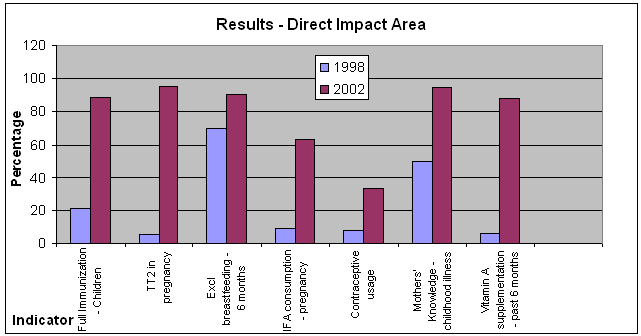
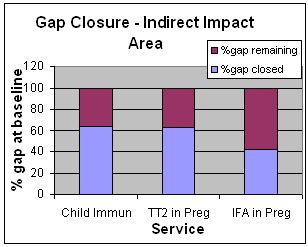
Community
Health Evangelism/Education (CHE) Antique, Philippines
Medical Ambassadors in Southeast Asia (MASEA)
Rhodora T. Mendoza, Ph.D. Email: rtmendoza@mybizlinks.net
| The Community
Health Evangelism (CHE) Program in the Philippines was introduced by Medical
Ambassadors International (MAI) in 1989.
Medical Ambassadors in Southeast Asia (MASEA), the partner in mission of MAI was given the task of establishing the first model CHE communities in eight regional areas in the Philippines, using the CHE strategy, a holistic approach in Christian development designed to help people in poor, underserved and depressed communities to take responsibility for meeting their physical and spiritual needs. One of these regional areas, located in the island of Panay, is the Province of Antique where a team of four(4) full-time Christian workers, together with the other seven (7) MASEA Teams went through a five day Training of Trainers course on how to implement the CHE Strategy. One of the first communities they identified is a village named Igdalaguit, near the foothills of a town called Sibalom. This was considered one of the most depressed villages in the area and it had the sad experience of being visited by an epidemic every year, especially when the rainy season sets in. The first few months were the most trying months that tested the faith and commitment of the team. While most of the village leaders, with whom they shared their vision, showed great interest in adapting the CHE program, they also encountered stiff opposition from some leaders who suspected the team as coming to their village to “convert” them to their own denomination. And so, although the village leadership voted overwhelmingly
to adapt the CHE program and began to identify from among themselves
people who will be trained as the Committee to oversee the implementation
of the program, the team continued to encounter not only opposition,
but also discouragement especially from government and non-government
agencies who kept giving them negative feedback about the attitude and
behavior of the village people, some agencies calling the people,lazy,uncooperative,
ungrateful and so forth. One night, this lady was lighting her small kerosene lamp to prepare the evening meal. She did not know that her son borrowed her bottle container to buy gasoline for his motorcycle. When she poured unknowingly the contents of the bottle in her lamp and lighted it, the whole lamp burst into flames and ignited her whole dress. She panicked and started shouting for help. Fortunately, the team was in a nearby house visiting a family, and when they heard the cries for help, they immediately ran and helped put out the fired that engulfed the woman. They hired a vehicle to bring her to the nearest hospital in the capital town of San Jose, Antique and stayed with her while she was being treated, and bought all the prescribed medicines for her. Everyday the team was in the hospital, looking after her needs and praying for her. On the second week, as she was recovering, she quietly asked the team who was visiting with her, “Why are you doing all these, in spite of what I have done to you?” The team simply answered, “We do this because of the love of Jesus. And we want to share this love with you.” And the woman, upon hearing this began to cry and between her tears said, “I want to know your Jesus.” And that night she received Jesus into her heart. Upon her complete recovery, she became the most vocal champion of the program and she went from house to house, encouraging families to get involved in the implementation of the program. This remarkable incident completely turned around the program in the village. The village Committee completed their training and began identifying people who were trained as CHEs by the team. They formed the core of volunteer health workers in the village. Included in their training were physical lessons on diarrhea, malaria, dengue, skin diseases and other sickness that regularly visited their village, and other lessons on sanitation, hygiene, gardening, latrine making. After each physical lesson, they also taught spiritual lessons on the significance of having a right relationship with Jesus. The focus of the training was on prevention of diseases, promotion of good health and on how to live their lives under the leading and blessings of God. After each session, these villagers under training would immediately practice what they learned in their own homes. Then they started visiting their neighbors, sharing the lessons they have learned. And because these CHEs were practicing what they were teaching, and visible signs of changes began to show in their homes and in their lives, they became very credible teachers of what they shared. Because of what happened in the first village, the team was able to expand to four more villages. Presently, the Team is serving 7,478 villagers in 1,469 households. In addition, they have recently initiated work in the municipality of San Enrique in the other province of Iloilo. Twenty-nine (29) Community Health Volunteers are now
actively visiting homes in these communities under the supervision of
their local committees. As of the first quarter of 2003, the team reports
the following results: In the same period of time, the team facilitated the immunization of 99.25 percent out of 633 children ranging from ages 1-5 and provided perinatal support for 188 women. They also helped 33 families gain access to safe drinking water, and enabled 89 percent of families to dig rubbish pits, 84 percent to build approved latrines, 76 percent to grow bio-intensive gardens, and 43 percent to start raising animals for protein. They have taught seminars on prevention of STDs, AIDS, sexuality, and premarital relationships with 250 young people in two different schools. The first visible changes of development were the physical
changes in the homes and environment in the village. In addition to
these, the building of a village learning center was started by the
committee in one of the villages which would serve as a meeting center
and a worship place during Sundays, and a day care center at the same
time where the malnourished children were fed. As the community continued
to work together for their own development, attitudinal and behavioral
changes eventually followed. Quarrels between husbands and wives decreased,
gambling eventually disappeared, and even the regular drinking sessions
of the men folk in the village grew less in frequency. Bible study cells
in a number of homes began meeting every week. In less than two years
of the CHE program in the village, those who received Jesus as Lord
and Savior started meeting in the village center for worship. Some unexpected benefits in the form of recognition and awards came to the people of these CHE Communities from the Provincial, Regional and National government. Among the highly prized awards Igdalaguit received was the prestigious “HAMIS” (Health and Management Information System) Award which was given to the village in recognition of the impressive changes in the health condition and situation of the people in the village and their cooperative efforts in bringing about this change. They received the Bronze Award and the leaders were called to Malacanang Palace, the seat of the government, to receive the award from the President of the Philippines. Another CHE community in the area was among the 12 runner-ups in the national “Clean and Green” contest sponsored by the First Lady of the Philippines. In May 2001, Dr. Milton Amayun and Dr. Allan Talens
of International Aid ,submitted an evaluation report on this program.
The external evaluation was conducted between October 2000 and March
2001, and focused on two communities served by the team: Mapatag and
Igdalaquit. The evaluation team reached the conclusion that “CHE
is an effective program for individual and community transformation.
Households participating in the program are generally healthier and
more spiritually focused than their non-CHE participating counterparts”.
Specifically, One of these is the closure of a new project site because of change in leadership in the village. The incumbent village leader lost during the local elections and was replaced by one who did not support the projects of his predecessor, regardless of the benefits they gave to the community. The reason was purely political motivation. So the team had to withdraw from the area and wait for the right time to resume work there. Incidentally, this community was the “control” community during the external evaluation which led into the decision of introducing CHE to help the people do something about their plight. Another is the economic hardship of some CHE volunteers which hinders them from regularly doing home visits for the reason that they have to address their survival needs first. This problem was addressed by introducing Micro-Enterprise programs with the CHE volunteers as primary beneficiaries whom they in turn taught to the families they visit. Their home gardens and livestock raising activities also helped them in meeting their daily food needs. In the next three to five years, the Antique CHE team will concentrate on the holistic development of the 28 villages of San Enrique, Iloilo. The endorsement of the town council headed by a Christian Mayor, provides the unique opportunity to implement CHE in cooperation with the local government as public policy. To continue the growth of their work locally and the expansion of their ministry internationally, these veteran workers have made it their goal to multiply themselves by hosting and mentoring interns who will work with them in San Enrique, and in the other communities they are serving. Interns will come from different areas around the world through Medical Ambassadors International CHE Internship Program. As of this writing, 18 Interns from different countries in South Asia, Central Asia, Korea, China, Canada and the US who are participating in this program for the period August 11 to October 3, 2003 are preparing to spend two weeks in San Enrique and Antique as part of their field exposure. From there, they will divide into 4 teams and spend another week in 4 of the mature areas in the other regions in the Philippines and experience with people in these communities the exciting development process of transforming peoples and communities through the Community Health Evangelism (CHE) program. |
The
Community Health Evangelism Program in the Dem. Rep. of Congo
Medical Ambassadors International
Dr. Gordon Claassen Email: gordon@med-amb.org
|
It was late in the 1980’s when Zaire (now the Dem. Rep. of Congo)
was experiencing a shaky and unstable period of transition from a military
dictatorship to the first fledgling steps of democracy. In the city of
Mbuji Mayi, East Kasai state, right in the heart of Africa, Kazadi Mpoyi,
MD, and pastor Lukusa had been recently trained in how the Community Health
Evangelism (CHE) program could be implemented in their rural area, two
and a half hours by road to the east of the city of Mbuji Mayi. In the
ensuing years, 2 other CHE program sites would be established, one in
the urban center of Mbuji Mayi, and another rural area two hour’s
to the west of the city.
Mbuji Mayi and much of the surrounding area is diamond territory. When the government sanctioned public prospecting of diamonds, the population of Mbuji Mayi began increasing. People moved to the area in hopes of striking it rich. It had immediate effects on the population: Students as young as fifth grade began dropping out of school to dig for diamonds in the surrounding hills and valleys; farmers quit cultivating fields and their wives helped to remove tons of dirt from the diamond pits as they indulged themselves in the prospect of quick and abundant wealth. The focus in life became more self-centered resulting in ignoring of others’ needs. Merchants from the city of Mbuji Mayi began trucking basic food supplies to these diamond areas since now, the demand began exceeding the local supply. It was cheaper to buy the staple manioc and corn flour in the city than in the rural area where it should have been grown. Men in the city left their wives and children alone at home for several weeks at a time, causing them to fend for themselves. The men lived in makeshift tent villages where food prices doubled, hygiene was deplorable, and prostitutes made big money. Many people were fortunate to find the too often illusive stones, while others labored in vain only to return home empty handed, weak and weary, where they knew wives and children waited expectantly for new clothes and plenty of food to fill their now aching and empty bellies. Prices of goods in the markets of the villages and in the city of Mbuji Mayi began jumping since those who found diamonds weren’t at all concerned about how much they paid for clothes, food, or basic household goods. Life became strained for those not involved in the diamond industry. Healthcare for the village people had been practically non-existent in the past decades as it was, and this preoccupation with diamonds was no step forward. The search for rapid wealth was also a step back in many people’s spiritual lives as they abandoned church and a regular faith walk. This was the context in which the CHE programs were begun. Since the Community Health Evangelism (CHE) program focuses on empowering families and communities to work together under the guidance of the Holy Spirit in identifying and solving local problems, using local resources, it is important to note here, for the context of this paper, that the term “project” is one that we seldom use. CHE is a long-term wholistic development program, and the word “project” too often connotates money and material being brought in.
In January of 1991, two full-time trainers per team were trained from the Presbyterian and Mennonite churches. Medical Ambassadors Int’l (MAI) agreed to support these teams and continue an on-going relationship with them for further training, translation and printing of training/teaching materials, as well as regular on-site visits. The MAI Africa director came for site-visits twice a year, going right into the villages and meeting with the committees and development workers and observing the progress made. Entry strategy into communities begins by the training team members building relationships with church (if there is one present), and community leaders in several villages. Awareness sessions, in which the community members are active participants in dialogue and discovery, help the trainers understand the worldview and mentality of the people. It also gives the people a broader view of their own lives and circumstances, and in the end, presenting to them the potential for a future with more hope. The villagers decide whether or not they would like to take ownership of the CHE program, and having decided for it, they choose a committee which is trained with 18 lessons regarding the CHE structure, Biblical basis of the program, and their responsibilities towards the rest of the community. It is these key people who make up the “ownership pillar”. Once trained, the committee members choose the village development workers whom we call Community Health Educators, or Evangelists (CHEs), who in their turn, are trained in some 40 lessons on the overall CHE program. These CHEs were informed from the beginning of their training that they would be volunteers, receiving nothing from MAI for their home visiting. In their training, we put much emphasis on the biblical basis, and, since one of their assignments is to share the message of salvation in Christ Jesus with their neighbors, they are trained in various methods of how to share their faith in precise and clear ways. They are also taught how to follow-up new believers in order to assure a deep and vital relationship with God. Other lessons also focus, of course, on specific health and development aspects relating to the villager’s context. After the initial surveys made by the Congo teams in 1991, several villages were chosen in which to begin. The teams did not choose the neediest village, but the one in which their survey showed they would most likely succeed. Word soon spread about the good things that were happening in those original villages and it wasn’t long before the trainers had delegates from other villages knocking on their doors asking them to come to their village next. With some good experience behind them, the teams began entering the more needy villages. Now, 12 years later, reports from the second quarter of 2003, informed us that the three teams are working with 144 committees. As the number of villages expanded, it was necessary to add other trainers to the team. An agriculturalist was found for each team, and recently some nurses have been added. However, the distance to cover was enormous so the solution found was to raise up some of the CHEs who had done an excellent job and who were well respected into positions, to become “CHE supervisors”. They maintained the visitation and teaching in their own villages, but now were given added responsibilities of encouraging and helping CHEs in newer villages. These people were given a minimal stipend for the extra time they were putting into the program. Through the years, some 40 churches have been planted with thousands of people committing themselves to Jesus Christ. The new, and newly “rededicated,” believers are “followed-up” with a series of 7 picture booklets which help them to grow in faith and in the knowledge of who God is and what He desires for, and of, His children. They are encouraged to join prayer and Bible study growth groups which are led by the CHEs. Pastors, committee chairpersons and village chiefs have all attested to the fact that there is now more peace, unity, and harmony where a CHE program has been implemented for several years. Abuse in all its forms is lower, life styles have changed, and children are more respected. Giving has increased in churches, pastors tell us. Reports received from the Congo inform us that the living styles (behavior) of people, as also noted in the previous paragraph, (and site visits made by MAI personnel have confirmed much of the information submitted in the reports) are changing. People are happy with the program since their children were healthier, and sick less often with upper respiratory troubles. Stomach and intestinal problems due to unprotected water sources are less frequent since they have now learned how to protect water sources, and how to purify their drinking water. Better hygiene practices, the use of latrines, and more knowledge on proper nutrition all contribute to a healthier, happier and a more fulfilled life. People also reported that illnesses were less severe since parents were learning how to home-treat some of the simple diseases, as well as learning at what point they should take their children to the health centers. Committee members were encouraged to have a communal field together – the proceeds from the harvests reaped are shared partly among themselves, while the remainder was to be designated for a specific project for the betterment of the village. Some village committees created a grain bank so that in the “famine months” of the off-season there would be grain to sell to the villagers at reduced prices. The pride and happiness conveyed by committee members during site visits by MAI personnel was remarkable and delightful to observe. Other time-bound projects such as adult literacy training, micro-enterprise programs ? all depending on the desires of the villagers, themselves, have been carried out. The training team was the stimulus, while the committee members and CHEs the driving force and implementers. Where the CHE programs continue on, the committee members had taken ownership and responsibility for the welfare of their own people. Many villages are too large for the scope and influence of one committee, so the whole village does not reap the benefit of direct home-visits by the CHEs. Since the CHEs work on a volunteer basis, they average, over a year, 2 to 3 visits per week. One CHE should normally visit between 20 to 35 families. One of CHE’s core values is multiplication, so our hope has been that there would be a “trickle-down” effect from families visited by a CHE to a “non-CHE” family. We had no scale by which to measure that unitl an external evaluation was done in the summer of 2002. It was found that there is a “trickle down” effect from a family visited and taught by a CHE to their friends and neighbors who have not yet been visited by a CHE. That was an exciting “confirmed” finding for us.
Spiritual: Conclusion:
The CHE program is having an evangelistic impact in the families it
serves. Health
Results Found: Conclusion: The CHE program has proved to be a catalyst to the improvement in diet and farming, with the concrete result of alleviating malnutrition. CHE teachings on prevention and treatment of illness have brought about a significant increase in awareness, understanding and practice of prevention and treatment of such common childhood ailments as malaria, diarrhea, and coughing.
Attempts have been made to help bring reconciliation about within major denominational conflicts, but with few immediate results. We encourage leaders towards forgiveness and understanding, but ultimately it is in their hands to deal with. As for the training teams which tend to wander from the advised strategy, we have found that in-depth refresher training, interaction with members of other teams, and site-visits to other CHE programs encourage, gives greater insight, encouragement and a desire for more creativity. We have now scheduled regular inter-team exchanges. Bringing in experts of different fields of knowledge also exposes our training teams to greater potential and broadens their horizons of thinking. As the program expands to further villages, and oversight on the part of the training team increases, we must look at the options available for meeting those opportunities. Wisdom would tell us not to get too spread out to the point that needed follow-up for newer villages become diluted. The challenge we face is to increase the number of trainers while finding ways in which those trainers can function on a volunteer basis, or at least not be dependent on outside resources for survival. We are experimenting on micro enterprise ideas so that they can have an income and at the same time not be dependent on an outside source. A site visit by MAI’s Central Africa coordinator this summer (’03) revealed that a greater enthusiasm and depth of understanding of the CHE program was very evident among the training teams, committees and CHEs. We believe that this was due to two major elements. First was the evaluation process last year. Not only were the training teams involved in putting the survey questions together, but the evaluator returned to share the results with them and the villagers. After hearing and seeing the gathered statistics, they were asked for their observations and recommendations for the future. This latter gathering gave the clear awareness to all the people present (village chiefs, committee leaders, CHEs and training team members) that they were the true owners of the program and of their own welfare. It also pointed out to them the extent of success of true and great changes that they themselves have managed to bring about in their communities and homes – as a result of their own efforts. We are pleased that the evaluator has accepted to visit the Congo twice in the next two years to follow through with the teams. Secondly, we attribute a renewed sense of enthusiasm to a Children’s Ministry begun by the person who did the evaluation. She had begun this ministry in West Africa, and upon seeing the extent of the network of the CHE program with churches, was convinced that this would be a ripe opportunity to begin this ministry in the Mbuji Mayi CHE program area. After several months of initiation, the children’s ministry has now been incorporated into the CHE program. A renewed sense of the worth of children, the need they have to be respected and cared for, has been instilled in the minds of the parents and villagers alike. Many fascinating and inspiring “testimonies” were given by people about the change in attitude and behavior in the children, as well as parents telling us how their children have returned home to “correct” them in various health aspects of their life-styles. This summer
as I was visiting a number of villages where our teams have been working,
a government official who accompanied us remarked after the first afternoon
that he had not dreamed of seeing such progress in his country, that
he was so surprised to see the difference between the “CHE section”
of the large village as compared to the Non-CHE area, and that he hadn’t
believed it possible for people to be able to express what they had
learned, and why they had changed – in the way he had experienced
it that day. “I will be your advocate to any government authorities
if the need arises,” he said. “This is something that needs
to be spread too all areas of our state.” We praise God for the
changes and transformation of lives that are taking place through the
committed and dedicated lives of the training team members. God is at
work in mighty ways through the CHE program in the Congo, yes, but also
throughout the world. |
CMF
Maasai Health Ministries
Christian Missionary Fellowship
John Sankok Email: nhm@maf.or.ke
Website: CMFi.org
| In
the late 1970’s, Christian Missionary Fellowship entered the country
of Kenya for the purpose of reaching unreached people groups for Christ.
In partnership with the Kenya Church of Christ, missionaries were stationed
in remote areas of the two poorest tribes in Kenya, including the Maasai.
The primary focus was evangelism and church planting among these people
who had no previous knowledge of Jesus Christ. However, the extreme health
needs of the local people demanded the missionaries’ time and energy.
In 1980, an American doctor was recruited to begin mobile clinics at the
sites of evangelistic work. Over the ensuing decade, a system of rural
clinics evolved to meet the health needs of the people. From its inception,
the medical work has been an outreach of the local church and a means
of demonstrating the love of Christ in a tangible way.
At present, CMF operates eight ambulatory care clinics in remote village locations within the Maasai tribe of southwestern Kenya. These eight facilities are simple, 4-5 room stone buildings with solar power for electricity and rain tanks for water. They have no X-ray or surgical facilities and minimal laboratory. While providing primarily ambulatory care, they are the ONLY medical facilities within their communities and thus provide essential medical care to the local people. The CMF Maasai health system serves a population of 80,000 from over 50 villages and covers a catchment area of 10,000 square kilometers. The clinic work is intimately integrated into the identity and function of the local church, thus serving as a main outreach and evangelistic tool of the local churches. While primary curative care is the obvious daily work of the clinics, a wholistic perspective and spectrum of activities is included by preventative health, community health education, AIDS testing, counseling, and education, and development projects. Through the combined efforts of the church and clinic ministries, wholistic healthcare is provided which has resulted in church growth, improved health, and transformed communities. The goals of the project aim for total health of each
person… in body, mind, heart and soul… and for total health
of the community, with transformation of the community into a community
of believers in the Lordship of Jesus Christ. The program includes multiple
activities that affect all aspects of individual and community life,
namely: The key to the success of this project resides in the word “integration.” The clinics and churches are closely integrated into their communities. The work of one is an integral part of the other. The players of one are players in the other components. For example, the clinicians are often church leaders, while church leaders frequently help in the clinics. Clinic workers and church leaders are teachers in the local schools. The clinic workers, church leaders and volunteers from the church provide community health education. Clinic staff and church leaders provide veterinary services, microenterprise advice or seed-funds, literacy training and agricultural help. Furthermore, the clinic work is integrated into the ministries of the local church. Many of the clinicians are key leaders of the local church; several are even ordained pastors and elders. They see their work as a ministry. They pray with patients and witness to them. Patients are shown the love of God in a tangible way and will often visit the church after receiving care at the clinics. The community views the clinic workers as church leaders and equates the clinic activities as an extension of the church. The CMF Maasai clinics are simple ambulatory care facilities, yet they provide the equivalent of inpatient care, by means of a natural facet of Maasai culture. Patients requiring multiple daily injections, wound & burn care or frequent follow-up visits will reside in the home of local residents. It is usually the Christians who will extend this hospitality, providing these patients with food and shelter. But they are also incorporated into the host family’s daily life, including Bible reading and daily devotions, thus meeting the social, emotional and spiritual needs of the patient and their family during the course of the illness. In this microcosm, we see the perfect picture of wholistic health care where physical, emotional, social, and spiritual needs are met at the same time. The cost of the program is approximately $127,000 (or 7 million Kenyan shillings) per year. The clinic system is presently self-sustaining for day-to-day functioning with 95% of the total operational costs being met by the community in the form of income generated by patient fees. Small fees of roughly $3 per child and $5 per adult are charged per illness treated. This charge covers the consultation fee, all medicines needed and all follow-up visits for any particular illness. These fees are both within the means of the local population and generate enough income to cover the operational costs of staff salaries and of medicines and supplies. Development projects are also based on self-sustainability by income generation within the project itself. Community health education is maintained by volunteers. Capital items, such as building construction, vehicles, etc. require outside funding and donations. The CMF Maasai Health Ministries is able to succeed based on several key partnerships. The project is sanctioned by the local government. Some components are run in cooperation with the government and/or the government may supply resources, medicines or lab supplies, such as the immunization program, antenatal program, family planning, Tuberculosis treatment program and HIV testing and counseling. Partnerships exist with other NGO’s and mission groups such as Peace Corp, World Concern, New Mission Systems ? either to accomplish a short-term task or to cooperate in a long-term program. Partnerships with the local schools include provision of books, water tanks, and teachers of Religious Education classes, construction of classrooms, and sponsorship of students. Cooperation with local schools is evident as some churches use school facilities for meetings. Regarding the spiritual impact of the CMF Maasai Health Ministries, the program is first and foremost God-centered and God-ordained, realizing that all healing comes from God. Through the compassion of Christian clinicians, people in need of care experience the love of the Lord much as Jesus taught in the Parable of the Good Samaritan (Luke 10). Secondly, as the project fosters church growth; church leaders and members have been encouraged to begin churches in new areas of Maasailand and beyond. New churches have begun without missionary input. As mentioned above, even though the clinics are only ambulatory care facilities, they often provide the equivalent to inpatient care, as patients needing prolonged care will live in the homes of neighbors…. usually the Christians, and will be given food, shelter and social support. These visitors are incorporated into the family life, including daily devotions and praise and worships times. They will often visit the local church after receiving care at the clinics and spiritual nurturing in these homes. Through the project we have noted an increase in the number and maturity of believers over time. Whereas quantitative statistical data regarding the outcomes of this program have not been collected over the 20 years of its existence, definite successes and impact within the communities have been observed: Integration of the local church with the clinic activities.
Due to the visible evidence of transformation in communities within reach of CMF Health Ministries, invitations to engage in similar outreach continue to come in from neighboring areas. We have had to take extra precautions when approached by local political leaders who will often ask for medical services/facilities or help in administrating community funds. Previous experience has caused us to dictate strong requirements that these leaders have no access to monies generated by the clinics or provided by NGO’s for a specific purpose. In the past, these men have presented themselves to the clinic to “check the books and take the money into town to deposit into the bank,” but we later learn the money never made it to the bank, but was “eaten” instead. In other instances, community funds committed to clinic projects such as the construction of a staff house were misdirected to other uses with funds taking years to reach the intended project. Skills can be taught but integrity cannot. For a medical system to be successfully self-sufficient, the staff members must have integrity and complete trustworthiness with resources and finances. Past problems have arisen when clinic staff began to steal money or medicines. Often, the use of alcohol or poor choices in lifestyle contributed to irresponsible behavior. Medical caregivers from the same ethnic group as the patients are much preferred over those from different tribal backgrounds. Fluency in the local language and respect for the local culture is often lacking from clinicians who originate from different tribes. Communication suffers and patients feel they are not given respect or proper medical care. They will often stop coming to the clinic, church or program activities. We have seen instances of patients walking great distances even passing other mission clinics in order to reach our clinics. When asked why they by-passed a closer clinic, they referred to the caring way in which they are treated in our clinics. Self-sustainability is a necessary goal; donated equipment is only useful if it can be maintained with local resources. Equipment manufactured in outside countries has quickly become obsolete and abandoned when needing repair, if parts or appropriate technology were unavailable. Effective administration of the clinics is an essential component to their success. In the early years, oversight of individual clinics was provided by a missionary family living near the clinic. Over the years, clinicians of integrity and proven ability were given more oversight responsibilities. In 1995, a CMF missionary (Dave Snyder) and a Maasai nurse gifted in administration and relational skills (John Sankok) were challenged by CMF to organize CMF’s Maasai clinics into an integrated system. Within three years, administration of the clinic system was then turned over to John Sankok as Clinic Administrator with Dave serving as a colleague and advisor when called upon. John has taken several management and administration courses through Daystar University in Nairobi to help him develop his God-given gifts. CMF missionary, Dr. Suzanne Snyder came to Kenya in 1992 to serve as the physician in charge for the CMF Maasai clinics. The long-term goal for the CMF Maasai Health Ministries is complete self-sustainability – financially, administratively, and medically. Finding a Maasai physician to assume the medical oversight of the program continues to be a major challenge. Overall, the CMF Maasai Health Ministries has served the Maasai and been a witness of God’s love in Kenya for 25 years. God has provided the ongoing success. May God be praised for the people who have been healed physically and reunited spiritually with His son Jesus Christ. |
Community
Based Health Care (CBHC)
Church of the Nazarene
Nazarene Health Ministries, Papua New Guinea
Bernard Gunn Email: rmorsch@melanesianaz.org
|
Nazarene Health Care Ministries came into existence in 1967 in what was then the remote Highlands of Papua New Guinea. Through a newly constructed hospital, curative medical services were provided to people who had very little health care. Preventive health care in terms of immunizations, especially for pregnant women and children, was an integral part of the health services offered from the outset. However, because of poor roads, poor transportation, the long distances between the Highlanders’ communities and the hospital, a lack of educational background to understand the root causes of disease, cultural restrictions, tribal warfare and many other factors, curative care to meet crisis needs became the norm. Preventive health care assumed a lesser priority. This approach to addressing health problems was the same for government services in the country. As the church-run hospital’s excellence of care became well known, the number of people receiving in-patient care increased. Expatriate nursing staff was inadequate to meet this need. This inadequacy, along with a commitment to train Papua New Guineans with a goal of self-sufficiency, led to various “nursing’ training programs from 1971 and culminated in the establishment of a College of Nursing in 1984. Many preventive health programs were integrated within the organizational structure of the hospital including 14 Maternal and Child Health Clinics centered in communities within a radius of 25 kilometers of Nazarene Hospital. However, since a “topdown” approach was used, participatory involvement by the communities themselves was an exception rather than the rule. Because MCH Clinics, which were institution based, did not result in changed behaviors, citizens, especially women and children from the communities, continued to suffer and die from preventable diseases and complications of pregnancy and childbirth. In 1992 a Community Based Health Care (CBHC) project, which centered on disease prevention and holistic community based care, was begun with active community participation in the rural community of Domil, Western Highlands Province, about 25 kilometers from Nazarene Hospital. Bernard Gunn, a nursing tutor in the College of Nursing considered Domil his home and returned there on weekends. Realizing that his community needed a health system which centered on prevention rather cure, he started preventive health work with the community’s full participation. Later he requested a Canadian nurse, Evelyn Weins, to spearhead the program. Sister Ev trained 23 Domil residents, both men and women who had been selected by the local Community Health Committee to represent each clan, to be Village Health Volunteers (VHV). The training of the VHVs using adult principles together with problem posing materials was conducted 2-3 times a week over a period of 13 weeks. These 23 VHVs became role models, health promoters, teachers and advocates of the concept that changed behaviors would result in a healthier community for everyone. Within the community she/he became known as a “health expert”. Unfortunately, upon the completion of the training of Domil’s Village Health Volunteers, the expatriate nurse had a catastrophic illness and was forced to return to Canada. Her desire to expand the Domil CBHC project into neighboring villages by the active involvement of specified, highly motivated VHVs who had been taught to be trainers and, therefore, to duplicate the project in nearby communities, could not be realized. Nevertheless, 12 out of the 23 original VHVs continued to actively serve the people of Domil. The community’s “index of illness” declined to the point that the aid-post closed due to lack of people needing curative care. In October 1994, Carolyn Matt, an expatriate missionary who had inaugurated a very successful CBHC program in India, was transferred to Papua New Guinea to work with PNG nationals to initiate a new thrust into CBHC. A Division of Community Based Health Care (of Nazarene Health Ministries) was established in March 1995. Bernard Gunn left his post as a nursing tutor in the College of Nursing and joined the Division of CBHC. Other highly motivated PNG health professionals joined the staff as well. They had seen the success of the Dome CBHC project and realized that multiple CBHC projects throughout PNG were an effective answer to the health needs of PNG citizens. A goal of the Division of CBHC was to expand CBHC within communities of the Western Highlands Province and gradually link Community Based Health Care into the government curative health services along with institution based preventive health care. It was 7 years later before this goal was reached. The CBHC program is now recognized by the National Department of Health as a model health program for the entire country to adopt. The government has acknowledged CBHC as a national training center and partnered with them to train all the communities in the district where Dome model community is located. From there the program will be replicated throughout the provinces of PNG. Community leaders make decisions, lead, and organize the community in order to achieve a better healthier place in which to live. Spokespersons from every clan are chosen by the community to make up the village Health and Development Committee. This group is trained to do need assessments, plan, and take action to lead the community in addressing these needs. Basic essential human needs for survival are assessed, and every family is encouraged to produce what is needed in abundance for their family’s survival. Basic services that can be shared by the families are assessed by the committees and made possible through community cooperative effort as well as networking with the government as needed. Health services are provided by teaching needed skills to Village Health Volunteers selected by the community who then provide their services to the community at no charge. Through the formation of community cooperatives, coffee belonging to all families is put together and sold for a good price. This improves each family’s buying power to provide those basic essential items that cannot be produced locally. Volunteer coffee experts are trained through networking with experts to improve coffee quality as required by the market. A community banking system is set up through community cooperatives to provide families with the ability to borrow money for building good family houses. Volunteer carpenters are trained to build the houses. Through community cooperation, the public government road going through the village is cleaned and maintained. Flowers are planted along the roadside and are maintained at no charge by the community. Community law and order problems are addressed by trained volunteer police. Customs and traditions that have a negative effect on health are altered by committee action and become community law. Such customs include paying high bride prices, compensation demands, polygamy and expensive funeral feasts. Women are empowered to make decisions that affect their own well-being. Women receive training in sewing and cooking. Spiritual health is enriched. All citizens are encouraged to join Christian churches, and all churches are encouraged to cooperate with each other rather than compete and cause division in the community. Networking with appropriate government departments is established to link communities with additional help. The vision of Nazarene Health Ministries is to serve the Church of the Nazarene in all of Papua New Guinea in order to meet basic health needs for the poor first and to prepare God’s people for works of service so that people will be brought to Christ and discipled, relationships will be healthy, and people will be spiritually and physically healthy. Institutionally based medical care, Community Based Health Care and church growth will be linked through joint planning. Community Based Health Care functions as the keystone in that it draws on health care services and at the same time works at all levels of the church. We seek to alleviate the pressing human basic essential
needs for survival and services such as health, infrastructure, education,
law and order, etc., through the empowering of communities with needed
skill-based training. This results in ministering to the whole person
providing social, physical, mental, spiritual and economic guidance.
The program empowers the citizens of communities to make decisions that
affect their well-being and take action through their own initiative,
community cooperation, and partnership with government departments and
major stakeholders to address needs and alleviate poverty. Churches are cooperating with each other. They are coming together for special times of community worship in which all denominations in the community participate. There are joint groups meeting for prayer intercession. New communities where there were no churches are now building new churches. People are coming to Christ and getting saved. Healthy communities have clean roads lined with bright
colored flowers. Every home has a clean environment beautified with
flowers and a kitchen garden where a variety of fruits and vegetables
are grown. Every family practices good personal hygiene and has a pit
latrine, rubbish pit, dish rack, fence for animals, and access to clean
water. Communicable diseases are prevented. People are living healthier
longer lives. Through cooperatives, the communities are now able to by-pass the middlemen and sell their coffee to the outside market for a better price. With their income, community members are able to build houses with metal roofs and purchase household items which they cannot produce locally. The project is a national program to address health and development needs of the 80% of the population of PNG who live in rural areas. We are now in the process of training a model district as the beginning phase of a partnership with the government. In the future we will train the entire province district by district. We will do then go province by province until the entire island country of PNG is reached. In the past communities were given free development package “handouts” by government politicians and mission agencies. Communities are gradually breaking free of this expectation since there are no more free handouts. Through CBHC training, communities are beginning to help themselves. Communities are being trained to no longer wait for government paid workers to provide needed services. The communities agree to provide their own free labor while we provide them with the skills needed to help themselves. We are in the process of developing a series of videotapes for teaching the concepts of CBHC in order to speed up the process of starting new communities. We desire to reach all of PNG with CBHC, but our staff
is limited in number. We |
ECWA
Evangel Hospital
Evangelical Church of West Africa (ECWA) and Sudan Interior Mission (SIM)
Dr. Sanusi Gidado Email: sgidado@hisen.org
Website: http://missionary.sim.org/blyth/evangel.htm
|
ECWA Evangel Hospital, Jos is a 180-bed general practice mission hospital
located in Jos, Central Nigeria. It was started in 1959 by the then Sudan
Interior Mission (SIM) as a health facility catering for the health care
needs of both her missionaries and the nationals. It has since grown to
become one of the foremost centers in Nigeria for the training of national
physicians in general medical practice (family practice). The hospital
has since been handed over to the current proprietors, the Evangelical
Church of West Africa, who has managed it with a staff strength of 270
of which 6 are foreign missionaries.
The purpose of Evangel Hospital is to glorify God by witnessing to our patients in word and deed the saving love of Jesus Christ, providing a quality and compassionate health care alternative for our community, and training and discipling dedicated Christians to assist the church in meeting her goals. In its fifty-four year existence the Hospital has been able to demonstrate the seriousness with which it takes this mission statement despite the many setbacks and challenges it has encountered. The hospital is famous in Nigeria as the facility from which the Lassa fever virus (a hemorrhagic fever) was first isolated and has remained a referral center for victims of the disease in North Central Nigeria. The general practice training program is highly rated at the National Postgraduate Medical College of Nigeria, helping to produce high quality and godly physicians for the nation’s health system. And more recently it is a center of excellence in the treatment and rehabilitation of victims of vesico-vaginal fistula (VVF), a condition still very common in Northern Nigeria, due mainly to certain harmful religious and social practices still prevalent in the region. The vision of the hospital is to continue to be relevant to the society as a facility that provides caring and compassionate health care providers, who care not only for the body but for the whole person and community. We see ourselves in the future as a referral center not just for other mission hospitals in the country, but to other health care facilities as well because of the quality of our services and the love of Jesus Christ by which they are provided. This vision is achievable as long as the church raises committed, and believing Christians willing to be trained and used in the service of the Lord. There is a busy outpatient department where the Gospel is presented by video and preaching and chaplains who engage the inpatients with bedside counseling and evangelism. The surgery department offers a range of inpatient and outpatient services and there is a complete obstetrics program from antenatal services through to postpartum care of the mother and child. The pediatrics and medicine departments are also staffed by consultants and residents who supervise the care of patients in the Adult and Pediatric Intensive Care Units. The laboratory, x-ray and physical therapy departments provide necessary support to all of the clinical services. The general practice training program commenced in the early seventies and has produced a number of quality physicians who have influenced the communities and facilities where they practice. A few now head mission institutions in and outside Nigeria, many practice in mission institutions in other African countries, while others are in private practice in Nigeria and overseas. The program currently has ten residents at various stages of training and ten on the faculty, many of whom are foreign missionaries. These residents and faculty provide the bulk of medical care, counseling and spiritual care for both outpatients and inpatients seen at the hospital. The program is also involved in the training and development of young men and women out of medical school who serve their internship year at the hospital. Many of them return to be trained in general practice. The program has helped to train and continues to train general practice physicians for both the State and Federal Governments in Nigeria. All have returned to their employers rendering the compassionate and quality care they learned while at Evangel. Finally, the program has continued to assist in a small way the training of foreign medical students who spend their elective posting periods at the hospital learning about tropical diseases and the practice of medicine in the tropics. Funding for this program has been borne wholly by the hospital, with many missionaries and groups assisting with educational and resource materials. The government, which is one of the biggest beneficiaries of the physician training program, has never been convinced of the need to fund and maintain the program. The vesico-vaginal fistula program was started 11 years ago by a missionary urologist who was concerned about the medical, social and spiritual plight of the victims of this condition. Many of the women were young Muslim girls. Most in their early teens were given out in early marriage and developed this condition as a result of a combination of not being ready physically and emotionally to have babies, lack of adequate and basic health care facilities in their communities, illiteracy, poverty and ignorance. Most of these women, because of the continuous dribbling of urine and the offensive odor about them, become social outcasts and end up driven out of their matrimonial homes. The Evangel VVF program offers compassionate and holistic care at no cost to these women. They are seen, have the surgery to repair the defect and are exposed to the Gospel at the same time. Rehabilitation - physical, social and psychological - has also been a part of the program. The center does about 300 procedures a year with over 50% of them being successfully treated and able to return to their families and homes. Many become believers in the Lord, though a few do so in secret. The funding for this project has generally been from foreign donors. In recent times the local community and charities have been enlightened of the need to contribute and many do so, especially women’s organizations. The hospital maintains a poor fund for the settlement of bills incurred by underprivileged members of the community of all faiths. Poverty is a real issue in the country and many people cannot afford to feed, much less seek and receive quality medical care. This service is rendered with the hope that the beneficiaries acknowledge the love of Jesus as He taught us to show kindness and compassion to the less privileged. Many of the beneficiaries would have remained and died at home, or at government facilities for lack of money. The scourge of HIV/AIDS has hit Nigeria. Though not yet as dramatic as in other African countries, it is slowly taking its toll on the human and economic resources of the country. The hospital has been slow to develop a policy to fight HIV/AIDS just like many others, especially the government, and is now faced with a crisis. Though late, the hospital has realized the need to take firm measures to fight the disease and is in the process of developing its own program of prevention, treatment and rehabilitation of victims. The experience and practices of those who have been at the forefront of the battle are invaluable to us. We have continued to review and learn from the best practices as developed and refined by others all over Africa. The effect and toll of HIV on our society has become a source of serious concern for the hospital, especially as the government and other agencies seem paralyzed by its rapid spread. We believe that though a medical condition, a holistic approach is likely the best solution to the disease. The hospital is in the process of, and will require assistance in capacity building across all strata of staff to face this enormous challenge. Our biggest challenges so far have been funding, leadership, commitment and dedication among staff, and the HIV/AIDS scourge. Funding for the hospital and its programs comes mainly from patients’ fees charged for services. There are no grants except for dedicated funds for projects and programs. This has meant that the hospital has continued to struggle for survival as increasing wage bills within the hospital and better welfare packages outside strangle the system. However, many of the staff are committed believers who know that they have been called to this service and are willing to contend with the difficulties for the sake of the Gospel and the love of Christ. With the church in Nigeria still growing, recruiting dedicated, committed and spiritual personnel, especially for leadership positions at all levels of administration, has been a problem. The poor wages and remuneration turn off many potential employees. Some who make the decision to stay become unfulfilled and frustrated so end up leaving. Through all of the difficulties and challenges, we have been assured of God’s comfort and protection. In the life of the hospital, we acknowledge that “unless the Lord builds a house, the laborers labor in vain.” We thank God for all the helpers that have come along the way to support the ministry. Many have remained, while others though have come and gone, they have left their mark on the hospital and the individuals in it. SIM has remained a dependable and formidable partner, continuing to assist with specialist physicians to the training program, and also financial assistance with many on going projects. The body of Christ in Nigeria could do more but seems unsure or unwilling to do so. The hospital on its part needs to show the way and shine the light for the church by demonstrating practical Christian leadership that works. Assistance from any organization in the name and love of Jesus will be highly welcome and appreciated. |
Ethiopian
Kale Heywot Church Development Programme Medan
(Saving the Generation) A.C.T.S. (AIDS Control, Treatment & Support)
Ethiopian Kale Heywot (Word of Life) Church & SIM (Serving in Mission)
Dr. H. Gabriel Alemayehu khcmed.serv@telecom.net.et
Dr. Tim Teusink tim.teusink@sim.org
|
HIV/AIDS is an unprecedented crisis in Africa and the country of Ethiopia,
destroying individuals and the foundations of families and society. As
a regional and global pandemic, AIDS is turning Ethiopia’s landscape
into a wasteland and threatens her future development and survival.
Unchecked, HIV/AIDS will retard economic growth, weaken human capital, discourage investment, exacerbate poverty and inequality, and leave the next generation increasingly vulnerable to the impact of the epidemic. For this reason, the epidemic cannot be viewed as merely one among many competing priorities in the nation’s development. Ethiopia's future depends on addressing this epidemic effectively at all levels of society, especially by faith-based organizations, community-based organizations (CBO’s), as well as government and private institutions. In the face of this crisis, the church is called to integrate both word and action. In a spirit of humility, we must preach and teach a biblical view of sexuality, minister to the sick, feed the hungry, care for the affected and the infected, help the disadvantaged and handicapped and deliver the oppressed. While we acknowledge the diversity of spiritual gifts, callings and contexts, we also affirm that the good news of the Gospel and good works are inseparable. These two concepts must be integrated, so that a holistic ministry can be offered to the community. The God of biblical revelation, being both creator and redeemer, is a God who cares about the total spiritual and material well being of every person. God's two great commandments are that we love Him with all our being and our neighbor as ourselves. There is no question that words and deeds went together in Jesus' public ministry. He demonstrated the kingdom of God's arrival by his works of compassion and power. The Word of God "became flesh" and thus we "have seen his glory". If God's word became visible, our words must too. We cannot announce God's love with credibility unless we also exhibit it in action. It is with this conviction that EKHC identified HIV/AIDS as a holistic ministry challenge and committed itself to addressing the problem from both spiritual and physical perspectives. It is essential that the church address the issue of HIV/AIDS by breaking the silence, through programs of prevention, fighting stigma and discrimination and caring for those who are affected and infected. With over 5 million members, the Ethiopian Kale Heywot Church impacts a large part of the country. To initiate our own contextualized, church based, comprehensive and biblical projects, in 1998 we organized experience-acquiring and learning study tours in countries where churches were already involved in AIDS work, to map out successful project implementation methods, the best practices in HIV/AIDS ministries and the challenges faced during implementation. With the goal of mobilizing the whole church to be proactive in the intervention of this global pandemic, the EKHC General Assembly approved the establishment of an office in the Medical Ministry Department responsible for HIV/AIDS, formation of a national board, establishing an office in each region and organizing committees at each local church. A. Vision and Mission of the Church in HIV/AIDS Ministry We as a church are called by Christ to wholeness of life lived under the guidance of the Holy Spirit. Our God is the God of Life, who created men and women in His image with equal dignity and worth. We believe the church is His instrument to proclaim and promote life. The AIDS epidemic destroys life. It is destroying the lives of people, families and communities and inhibits the very development of nations. AIDS makes us ever more aware of our alienation from one another and God. HIV/AIDS is a unique historical crisis which God has allowed to touch our generation and for which we have His message. It has far-reaching implications for the church in the areas of theology, health care, social services and evangelism. Since we are dedicated to glorifying God through evangelizing the un-reached and ministering to human need, and since the HIV/AIDS epidemic has become a unique factor in the spectrum of those needs, we must respond with a prophetic voice and compassionate heart. We have an obligation to become involved and we will be held responsible for our response. We confess that our response to this crisis has often been inadequate. We pray and humbly believe that with God's help, we can fulfill our mandate to preach the gospel and be salt and light in society, to the ultimate glory of God. Disease and death have been in the world since the fall of man. At certain times there have been epidemics or cataclysmic events so widespread, so devastating, or so related to the actions of those affected, that these crises have aroused deep theological reflection. Unlike many natural disasters, the disease of HIV/AIDS affects every country, strikes every society and leaves a wake of death and suffering in its path. There is no known cure. While many suffer through no direct result of their own behavior, the disease is most often transmitted through individual immoral acts. The social, economic, emotional and spiritual implications of this epidemic are profound. We speak boldly because God gives the unfailing hope of life beyond death. We affirm that God has called us to stand in the gap of the wall of defense around our families, communities and nations. The destructive force of AIDS can only be met with the power of Christ working in us. We must stand in this gap before the epidemic destroys our families, our youth, those we love and those we ought to love. Christ must be incarnate in us and our culture. We must, therefore, examine our cultural practices in the light of God's commandments and promote those biblical core values, which should form the norm for every culture. We will appreciate and encourage our traditions that support wholeness and fidelity. We believe that the prevention of AIDS is best promoted in God's ideal of faithfulness in monogamous marriage and sexual abstinence before marriage. We recognize that we can fall short of God's ideal and suffer the consequences. Our ministry approach is holistic and is related to spiritual, physical, social and psychological needs, including needs of caregivers, with a particular focus on children and youth. A deliberated balance should be given between prevention and social support or care. Prayer should be an integral part of the response to the epidemic. The pain and alienation of AIDS compels us to show and offer the fullness and wholeness that is found in Him alone. In this time of weakness, the rule of Christ's love in us should bring healing to the nations.
1. Increase
access to prevention and care through: 2. Improve
quality of service through: 3. Improve
institutional capacity through: 4. Build
partner’s capacity through:
1. Information, Education & Communication (IEC) Behavioral Change Communication (BCC) 1. Training
in peer-education 2. Counseling 3. Home Based Care 1. Awareness
raising through health education 4. Psycho-social Support 1. Counseling 5. Prevention
of Mother-to-Child Transmission of HIV/AIDS (PMTCT) 6. Reproductive Health and Family Planning Services (RH/FP) 1. Contraception 7. Advocacy 1. Human
rights and ethics D. Main
Target Groups The EKHC's HIV/AIDS Projects serve not only our local churches but all the Evangelical Church Fellowship of Ethiopia (ECFE) churches in project areas. With decades of experience, we are uniquely positioned to help other denominations, many of which do not have an HIV/AIDS programme. Currently, we are establishing VCT centers at the project sites, so that all churches can utilize the centers for premarital testing, which is now mandatory in churches. Thus far, 29 churches from 18 denominations in two cities have cooperated in HIV/AIDS prevention and care projects, where previously there had been no cooperation. Jimma Medan ACTS project evaluation and its implications With these
strategies and vision, the EKHC launched a three-year pilot project
in Jimma (Southwestern Ethiopia) in July 1999, which has now finished
its pilot phase. It was assessed by external evaluators in August 2002.
According to the final evaluation, the Jimma Medan ACTS (AIDS Control
& Treatment Strategies) Project was a success and the evaluation
team recommended EKHC utilize the lessons learned from Jimma Medan to
enhance work with HIV/AIDS across Ethiopia (there are currently four
similar projects). 2. The proportion of church youth with the knowledge of means of transmission and prevention significantly. About 89.4% of church youth had heard of STI’s during the final survey compared to 75.9% during baseline survey. The proportion of church youth who received information on HIV from printed IEC materials increased from 57% to 68%. Significantly higher proportions of church youth discussed HIV/AIDS with friends and family members. Request for premarital HIV status rose to a significantly higher proportion of church youth (64% to 91%). 3. Knowledge in schools of the means of prevention of HIV improved significantly for students in grades 6 & 8 with reduction of sexual activity. Knowledge on STI’s has also increased for students of all grades. 4. The proportion of students in all grades who discussed HIV/AIDS with friends and teachers increased significantly. The proportion of school youth who have sexual partners was significantly reduced. Following the successful first phase of the Jimma Medan ACTS Project, lessons were drawn for replication in other project sites. This includes more focus in major areas such as: - The
pilot phase of the project focused on sensitization and awareness creation.
For the work to be sustainable in the schools and community, projects
need to include life-skills development activities. This includes training
teachers and other significant adults in the lives young people in these
techniques. Additionally,
during the pilot phase of the Jimma Medan ACTS Project, we found that
when working with churches, progress was limited at the pace of the
slowest participant. Problems were due to: The experience gained and lessons learned during the first phase of the programme are added assets for successful implementation of ongoing and future projects. The AIDS crisis gives the Church unprecedented opportunities to fulfill her mission of bringing the Gospel of Salvation to a sin-sick and dying world, as well as showing Christ’s compassion to those who are desperately in need of His healing touch. Through this work, we have had many opportunities to do both. We pray that the Lord will continue to use this ministry to further His Kingdom even in the midst of this terrible epidemic. The relationship between the Ethiopian Kale Heywot Church and SIM - SIM (formerly Sudan Interior Mission, now Serving in Mission) began working in Ethiopia 75 years ago and from the beginning emphasized medical care, prevention and development along with evangelism and church planting. Currently, SIM has more than 150 long-term missionaries in Ethiopia plus many short-term associates. In addition to other projects, it is partnering with the EKHC on the Medan Addis Ababa Voluntary Counseling and Testing Center to address the AIDS epidemic in Ethiopia’s largest city. - The Ethiopian
Kale Heywot (Word of Life) Church (EKHC), which grew out of SIM’s
ministry and is independent, is the largest Evangelical Church in Ethiopia
with a membership of over 5 million and has extensive Community Based
Development initiatives, including health and HIV/AIDS. It is a leader
among Ethiopian churches in the area of HIV/AIDS prevention & care. |
Evergreen
Yangqu Projects
Shanxi Evergreen Service
David Leung
Website: www.evergreenchina.org
|
Evergreen’s Purpose statement and core values Evergreen’s purpose is to assist Shanxi and other Chinese Provinces by developing public benefit services for the common people, continuing the good works of Ye Yongqing (Peter Torjesen), acknowledging God’s gracious calling in our lives, and reflecting the credibility of Christ. Our core values are: Three periods of time Almost fifty years later, God answered their question. In 1990, the Torjesen children were invited to return to Shanxi Province to attend the dedication of a memorial to their father. Peter Torjesen’s children, grandchildren, and great grandchildren arrived from various parts of the world to attend this ceremony. At that time, the vice-governor of the province extended an invitation for the family to return to Shanxi and “do what their grandfather had done.” After three years of planning and prayer, the first team of three families from the Evergreen Family Friendship Service (“Evergreen” for short) moved into Taiyuan, the capitol of the province. Now, ten years later, we can look back and see God’s hand in moving and changing us to work and provide meaningful and relevant services to the communities in which we live. Those initial plans bear slight resemblance to present realities. The following paragraphs will chronicle some of the advances, changes and turns that God led us through, as well as what directions He seems to be pointing us toward.
Yangqu County, located in the north east corner of Taiyuan prefecture, is only 30 km from the capitol of the province. Despite its close proximity, rural health conditions, educational opportunities, and the overall level of the population seem far removed from the provincial seat of power. According to 1996 numbers (the year Evergreen began work in Yangqu County), the county has a total population of 138999, the majority of which live in the 245 villages. The hilly terrain and lack of water (annual rainfall of 44 cm) make farming difficult for most, as confirmed by the average annual per capita income of 1415 RMB (USD 171.30). Educational opportunities are also limited, as there were only 64 people in the county with a bachelor’s degree level education or higher. About 10% of the county’s population is professing Catholics (13,000), with about 250 Buddhists, and a smattering of Muslims, Daoists, and Christians. Yangqu Profiles As Mr. Wang looked over his small plot, he remembered his desperation of a few winters back. His wife had fallen on an icy road, fracturing her hip. He immediately brought her to the hospital where she was put in traction. He had spent all that he had, but ran out of money a couple of weeks short of discharge. At that point, he somehow heard about Evergreen’s Samaritan Fund. Through the assistance given, his wife was able to complete her treatment and recover quite well. Mr. Wang maintained contact with Evergreen, so when the opportunity came up to manage one of Evergreen’s experimental agriculture plots, he readily agreed. Now, he is not only learning about new techniques and strains of vegetables that would improve his family’s income, but is also involved in studies with our staff. Mr. Liu was amazed as Dr. Alice Chen, one of Evergreen’s doctors, brought several bags of formula to his home. His twin infant girls had become increasingly weak, and were quite malnourished by the time Dr. Chen had found them during a Well Baby visit. While Mrs. Liu cared for her children, she was distracted by her mental illness, and was unable to provide them the care they needed. Mr. Liu had just recovered from tuberculosis, and had also been unable to care for them. Through Dr. Chen’s care, and later through the introduction of some drip irrigation equipment, the Liu’s were able to improve both their health as well as their economic situation. Mrs. Wang had been sent home to die. Although she had just turned thirty, she had already been ill for several years. She had been treated at several of the provincial level hospitals in Taiyuan, and her family had spent more money than they had to assist her. As her pneumonia progressed and her kidneys failed, the family finally decided to take her home rather than letting her die in a city hospital. When Dr. David Leung visited her the next day at her village home, she could only weep over the fact that she would not have the opportunity to care for daughter or mother. After praying for her and sharing about the way, truth, and life, Dr. Leung returned home. One week later he returned to find her sitting up and much improved. When they discussed the previous week’s topics again, she asked she might enter into that way. Some months later, we found that Mrs. Wang had not only joined some regular meetings, but had brought her mother as well! Medical
Work Due to the emphasis on clinical training, Evergreen doctors began providing regular care for patients through the outpatient department of the Yangqu County Hospital. Patient numbers slowly grew, as did the number of established patients. This, along with a continually increasing degree of acceptance in the hospital, is a great encouragement to us. The ongoing clinical presence in the Yangqu County Hospital also provides opportunity to promote Continuing Medical Education (CME). In 2002, we worked with the County Hospital administration to provide training an upgrade for ACLS training, upper endoscopy, topics in gynecology, COPD, and Tuberculosis. The Well Baby program also began in 1996. Since then, the program has spread to include seven of the County’s ten townships. The goals for this project include providing basic health education for the parents, screening for high risk children, prevention of rickets, and improving the teaching skills for local village doctors. The number of children examined and parents educated has steadily grown over the past seven years, for a total of about 4200 infants over the first six years. Twelve hundred infants and toddlers received care through the Well Baby program in 2002 alone. As the workers hone their skills in providing individualized care and patient education, we continue to challenge them to improve. The project is jointly managed by Evergreen and Dr. Peng, and run in cooperation with the County Public Health Department, the County Maternal Child Health Department, and eight of the local township hospitals. After several years of cooperation, the County Maternal Child Health Department approached us about starting an antenatal care project. As this was a logical extension to the Well Baby work, we agreed. However, it became clear after a short period of time that they could not follow through on their initial project proposal. At that time, Evergreen was fortunate enough to find a midwife with excellent teaching skills to coordinate this program. Petra de Ruiter provides the leadership to make this program successful. The goals are similar to those of the Well Baby program (improving the village doctors’ health education skills, providing pregnant women with basic care and education, and screening for high risk pregnancies), but the scope is narrower. We are targeting 100 to 150 pregnant women per year located in twelve predetermined villages. During several work evaluations last year, the workers showed considerable progress in their knowledge base, their practical work skills, and their level of self-confidence. Several high-risk mothers were discovered and given appropriate treatment. These successes gave a degree of confidence in all the workers. Focusing around the topic of breast-feeding, we created opportunities this summer for the township doctors to train the women of their villages. This was well received. In all of our medical projects, we come across patients who are too poor to afford even the most basic form of medical care. From this very concrete need, we were moved to start a Samaritan Fund. This project purposes to provide assistance for local financially disadvantaged patients so that they might recover, escape a cycle of poverty, and be able to contribute again to their family and community. Because of ongoing economic depression in this area, the Samaritan Fund continues to play an important role in subsidizing medical care to needy families. 30 people were helped in 2001, and 28 patients in 2002. About $5,000 was distributed to assist these 28 patients during this period. Administrator Bai Yongen (her name means eternal grace) not only supervises the program, but also in provides compassionate counsel. While most of our work is focused in Yangqu County, we also do some urban-based medical training. We generally have 3-4 Short-term foreign medical experts come through each year. We also cooperate with the Provincial Level Ministry of Health to help train physician to provide primary health care. The national level Ministry of Health determined that 30% of China’s physicians be trained in Family Medicine by the year 2015. In 2001, the Provincial level Public Health Bureau invited Evergreen to take part in the training of the first class of these doctors. The first formal Family Practice training in Shanxi began in September 2001 with a class of thirty-four students. Evergreen’s three Board Certified Family Practice physicians participated in this course, providing clinical instruction, practical classroom teaching, and clinical simulations for these doctors. We repeated this course in March 2003, and recently taught in the inaugural Family Practice Teacher Training Course in August 2003. The Evergreen Medical team plans to continue this participation, and hopes to continue to contribute significantly to this strategic work in Shanxi Province for years to come. An
explosion of opportunities At this point, Evergreen pays scholarships for over 200 students in order for them to stay in school. We also run a bookmobile to 10 village schools in order to provide village children with extracurricular reading material. At the county seat, Huangzhai, we have opened a community center which provides library services, computer training and English programs for students. In Yangqu, we have also started agricultural work in order to help bring information, technology and training to the local farmers. We have opened an Agricultural training and demonstration center which currently houses a pig raising unit, green house, demonstration field, and biogas digester along with classroom, dormitory, and agricultural library. We have introduced better crop strains, initiated a farmers’ cooperatives, trained farmers in better pig management, and placed piglets or sows in poor homes to promote income generation. Through our service to the common people, we have striven to demonstrate the love of God to the people of Yangqu. Transformation takes time. When we first arrived, Dr. Peng told us that it would take five to ten years for the people to understand why we have come to this place. We have found his statement to be true. It has taken a number of years for us to establish ourselves and our work in this place. Over this period of time, we have had small numbers of people coming to faith because of our work. In the last couple of years, however, we have seen doors opening in this place. As people see us in the hospital, in the school, in the fields, we have been able to touch their lives in a number of places. As we care for various aspects of their life, spiritual care is a natural component. People who have been touched by the Samaritan program, the scholarship program, teachers in the bookmobile program, have made life changes. We have seen the effectiveness of our work extended by our Chinese co-workers who are not constrained by language, culture, or government regulations. Also, a cooperative effort with the local body has provided follow-up in situations where we are unable to follow-up. We have far to go, but we have seen enough success to excite us on to see what else God has in store. 1 P. 2-3,
Yangqu County Statistics, Shanxi Guji Publishing Company, 1999. |
Family
Medicine Specialist Training Program
Scientific Technology and Language Institute and others
Dr. Barton Smith Email: be_smith@bigfoot.com
Dr. Paul Fonken Email: joyful@postworld.net
Website: www.stli.org
In 1995, the Ministry of Health (MOH) of the newly independent country of Kyrgyzstan began planning a comprehensive health reform project, entitled “Project Manas”, in honor of the hero of their national epic poem “Manas”. A key element of this project was strengthening primary health care services by introducing the specialty of Family Medicine (FM). Since the specialty of FM or its equivalent was unknown in their Soviet-style medical system, the MOH requested the help of foreign FM doctors to introduce the specialty. A newly formed Christian-based non-governmental organization named the Scientific Technology and Language Institute (STLI) responded to the request by providing volunteer physicians and nurses from multiple countries and from multiple mission organizations. By 1996, the MOH, WHO, World Bank, USAID and STLI had all agreed on a plan for health care reform in general and for the introduction of FM in particular. By March of 1997, the first FM training began, initially focusing on a training of trainers (TOT) program to retrain Kyrgyz internists, pediatricians and gynecologists to become teachers of FM. It soon became evident that the new family doctor trainees could not function as family doctors unless nurses were also retrained as FM nurses. Consequently, STLI nurses also retrained nine nurses as clinical FM nurses that first year, and then started a FM nurse TOT program. Since then the FM training has expanded to include the retraining of thousands of primary care doctors and nurses, a national two-year postgraduate training program for recent medical school graduates, a new continuing education system for graduates of all of these programs, and the publication of FM training material in Russian, especially in nursing.
Health Care Expenditure by the Government of Kyrgyzstan This health care crisis prompted an evaluation of the entire health care system. One dominant problem was that only 10% of health care funding was being used to for primary care. The number of health care providers was generally adequate, but primary care doctors and nurses were narrowly trained and the scope and quality of their care was generally poor. Their main responsibility was to triage patients and refer them to the proper specialists. For example, pediatricians were required to refer children to seven different specialists and to do 11 different lab tests before granting them medical clearance for kindergarten. Internists (therapists) and gynecologists still do not treat patients with minor emergencies (lacerations, abscesses, nasal bleeding), sexually transmitted infections, depression, or many other common problems. A multitude of regulations governing the scope of practice required primary care doctors to refer over half of their patients to narrow specialists. Another problem was that Kyrgyzstan has too many hospitals and inefficient systems for administering and financing tertiary care. Also, in the capital city the hospitals are divided by specialty (eg. Cardiology Institute, Surgery Hospital, Eye Hospital). The hospitals are over utilized, with the annual number of admissions nearing ¼ of the country’s population and the average length of stay still exceeding 12 days. Key stakeholders concluded that this emphasis on tertiary care was too costly and not very effective. Consequently, Project Manas includes major reforms to “rationalize” tertiary care and to improve financial and administrative structures.
STLI, the MOH, the Kyrgyz State Institute for Continuing
Medical Education (KSICME), USAID, Abt Associates, the World Bank, and
the Kyrgyz State Medical Academy (KSMA), are introducing the specialty
of FM throughout the country of Kyrgyzstan, and on a more limited basis
in the surrounding Central Asian Republics. This eight-year project
is using a combination of short-term and long-term FM training programs.
1. Training of trainers (TOT) programs for nurses and
doctors using a one-year curriculum to produce FM trainers (1997-2004) 2. Retraining programs for about 2500 doctors and 3500
using a four-month curriculum for doctors and two-month curriculum for
nurses to prepare them to work in “family group practices”
(FGPs – see below). (1997-2005) 3. Publication of FM training materials in Russian, especially for nurses. Long-term “permanent” programs (started in 2001) 1. National FM postgraduate residency program using a two-year curriculum for about 50 FM residents per year. 2. Continuing medical education for graduates of all the programs above. 3. Continuous quality improvement programs for the primary
health care practices (FGPs) Facilities and Administration
Because of the very broad scope of this project, it
will be many years before its full impact will be evident. Implementing
the principles of family medicine involves a major paradigm shift for
the doctors, nurses, other medical staff, and the government health
care system. Changing clinical reasoning, medical practice and the legal
and policy framework for medical care requires many years. Nonetheless,
there are some initial signs of a positive impact related to the health
reform process in general, and to family medicine training specifically.
Most of the documented impact so far consists of intermediate indicators
of improvement. Both informal and structured evaluations of the new
FM trainers have shown that the breadth of their clinic knowledge and
skills has improved. For instance, before the TOT program, none of the
doctors were able to us an otoscope or ophthalmascope, whereas now they
all can do that. Objective Structured Clinical Examinations (OSCE) done
this year, however, showed that some of these new trainers still have
some significant weaknesses in their clinical reasoning skills. Written
exams of the newly retrained FGP doctors and nurses at the end of their
retraining courses have shown significant increases in the breadth and
depth of their theoretical knowledge. A more formal evaluation of their
clinical skills and everyday practice habits is underway, but those
results are not yet available. The actual effect of the initial four-month
retraining course on clinical outcomes may be limited, given the fact
that the course included a lot of didactic training and was only four
months long. Also, in some areas of the country, reform of the legal
and policy framework and health care financing have lagged behind the
clinical training process, making it difficult for the doctors and nurses
to quickly apply what they were learning. Hopefully, the new continuing
education system will address persisting deficiencies by building further
upon the initial foundation laid by the retraining program. The main ongoing challenge for the STLI volunteers is
to responsibly work their way out of their jobs and to leave behind
a sustainable and reproducible FM training system. The dire economic
situation in the region and strained interpersonal dynamics between
various local colleagues make this a big challenge. The new family medical
trainers have unique training, so it will be difficult for the government
to keep them from leaving for higher paying jobs. Currently, the official
salary for teachers in government medical education institutions is
only around $20/month. For now, the FM teachers are receiving gradually
decreasing salaries from USAID. The local FM teachers have just formed
their own NGO, which hopefully will help to allow them to supplement
their low government salaries in the future. The business side of medical
education is very new to them, however, and it will be a big challenge
for them to survive financially for the long term. Hopefully, further
training and mentoring in medical management and leadership will help
the local staff meet this challenge successfully. |
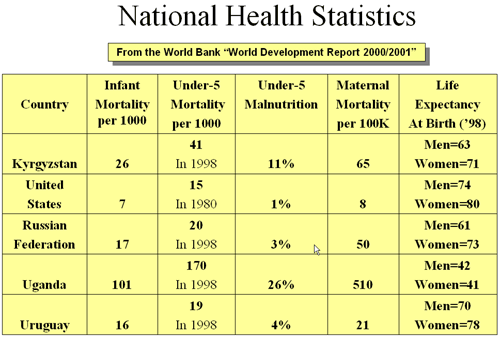
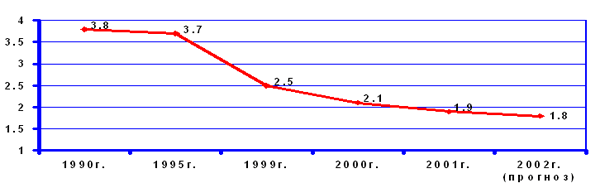
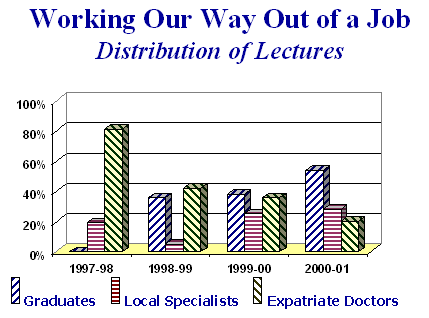
Glory
Email Address: tmackinney@yahoo.com
| GLORY attempted
a model project, combining establishment of a health service, with the
planting of the first church in a remote district in South Asia. This
part of South Asia has a unique church history. Despite some level of
religious freedom, there is stiff persecution for new believers. Missionaries
came as “biprofessionals,” generally using health and development
as a means of entry. Most South Asians, who come to the Lord, still come
as the result of a health event. Rapid growth of the church has occurred
in certain areas of the country. The church has enjoyed rapid growth overall.
Still there are geographic areas and people groups that have been untouched
by the gospel. Health care continues to be a huge need. GLORY was asked to start a hospital in a remote district. At this location there were no known believers. It was at the corner of three districts, at the second biggest commercial center in the district, on a major (pedestrian) trade routine connecting South Asia to China. So, it was seen as also strategically important. Our goal was to plant a church that would be indigenous, reproducing, and able to run independent of expatriates. At the same time we planned to start a health facility (15 bed primary health care center and community health program) that would meet pressing health needs. An official agreement was signed with the government for the health services, providing places for 15 visa posts. EVANGELISM METHODS By God’s grace, a church has been planted. The church planting team rotated teaching responsibility for the first 2 years, with the South Asian brother doing more of the up-front preaching. After about a year people started coming to the Lord. Initially laborers came, with 60% low caste. There has been linear growth, with 4-5 per year coming to the Lord. Currently there are about 40 in attendance with 25-30 baptized. This includes many associated with the health work. All of the believers were from the immediate area. Increasingly the church is involved in releasing people from the control of demons—a large felt need of the community. This area of South Asia seems to be more resistant to the gospel, so this level of growth is fairly significant, though more rapid multiplication would still be desired. We have regular nurturing contact with churches that have started in neighboring communities. Outreach was more feasible initially, but a guerilla movement centered in our district has made it unsafe even for nationals to venture into surrounding communities to preach. There have been many significant and long-term positive effects. Because we are the only expatriates, the only Christians in the area, and the only operational NGO, most of the changes can safely be attributed to the project. Health care improved dramatically, with a 90% drop in local mortality. The community gradually discarded a multitude of false ideas, including health issues. Significantly fewer patients went to witch doctors first for their care (which would have been the standard previously). Presence of the hospital brought an economic transformation to the valley, with a burgeoning bazaar due to patients traveling long distances and then using the trip for shopping also. Education had been very poor, but inputs that we made into the schools (including health education and facility improvement) have remained. The community’s attitudes toward Christians in general have modestly improved, though many still are very hostile. Initially there was persecution of the believers. The
primary persecution was ostracism from the close fellowship of the village.
They have said that though they still live there, have friends, and
work there, relationships are more distant than they used to be. This
subtle ostracism is more painful for them than a beating—they
have said so. We have done everything we could to keep them in their
community in every sense Biblically possible, but it has been only partly
successful. Rice Christians—those that were only interested in spiritual things for their personal financial profit—were a problem. These were hard to differentiate, and hard to deal with, since in reality many Christians had or got jobs, so some “seekers” came for that reason alone. Outside Christian groups would stop by, encouraging new believers to go their training in the city. This emphasis pulled believers away from the village into often times useless or inappropriate training. It caused jealousy with those who got to go (and see the big world), and it often took decision making out of the hands of the new church elders. We were able to reach both high and low caste South Asians, but were unable to penetrate the influential businessmen, the professional class, and the politically powerful. Even some businessmen mentioned this to us late in the project. Perhaps if we had targeted them from the start it would have been different. We failed to include the national missionaries in our very critical early teambuilding exercises. They weren’t always on the same page with the expatriate coworkers and had different approaches/ideas that hadn’t been ironed out before hand. This also left the South Asian workers feeling a bit like second-class citizens. There was no cross-cultural training for the South Asian missionaries. We were amazed at how painful it was for them, even though they spoke the language and were from the same country. Some left prematurely due in part to issues of culture shock and burnout. We should have helped them prepare for the change. Sometimes new believers who weren’t ready were pushed too soon into leadership or people with wrong motives were allowed to take control, which weakened the group and actually left a dearth of Biblical leadership. We should have been more specific in our selection (rather than more like a political process). We have been able to build a facility with interesting appropriate technology. Since this area is known as a difficult place, we were convinced that getting outside staff to work at the hospital would be hard. We decided to take only local residents as staff. We hired entry-level staff based on a heart for service, and success on our administered English/Math/science test. If they proved good workers, they were sent for further training. Using this technique, we were able to supply mid-level medical assistants, nurses, lab techs, and other needed health workers. The community also recognizes that we were able to get almost uniformly high quality workers. The doctor continues to be either an expatriate, or a highly paid national doctor from outside the project area. The staff has had a high vision for serving their own community, and keeping the hospital working to serve the poor, even under very hard circumstances. The administrator, also a local man, has been well trained, and carries the vision for a clean, effective hospital that serves the poor. The community health work has been effective in reaching out into the community to improve literacy among women, to teach health, to improve potable water access, and to address the problem of critical childhood malnutrition. A number of facilitators participating in the program have come to the Lord The health work has made a huge difference. The hospital has earned strong credibility in three districts for skilled quality, and loving care. It is the only facility in three districts that always has a doctor and medicine at the same time. A patient was overheard telling another that this place was different because there was love here. Everyone knows Christians are responsible for this. Health conditions were so terrible before we came, that people would die with diarrhea and pneumonia for lack of treatment. Because of our work, mortality dropped 90% over the 10 years of the formal project! The project has received recognition for excellence. The American College of Physicians gave the project a national award for innovation and excellence. Handing over the hospital appeared for a long time to be impossible. We did not see South Asians in our area interested and capable of taking over a full health project in a remote and difficult area. However, God had prepared a national Christian mission organization to do this kind of work. SERVE is an indigenous South Asian Christian NGO committed to using development work (primarily health work) to further the Kingdom. It was their vision to take over established mission hospitals. They agreed to take over the GLORY Hospital. The organization’s leadership represents some of the country’s key church leaders. Working in concert with them helps and strengthens the national church. South Asians often view Christians as interested in only spiritual things, ruining the “natural culture” of Hinduism, but doing nothing constructive for their community. By doing health work, this national mission agency intends to empower the believers in those communities to take a major role in the hospital, and so raise the status of national Christians in the esteem of the community. The leader also has found that countrywide the upper professional class in South Asia has been largely unaffected by the gospel. Using his role as leader of a successful NGO doing health work gives him easy inroads into this unreached community, and he is building a church himself to meet the needs of this unreached people group. We are pleased that the exit strategy developed at the start could be accomplished. God provided a very capable national mission agency to take over the work. It has been a boost for their organization (and by extension the national church). We trust it will develop from here into a model of partnership and cooperation with the national church. Since 1993 GLORY has been able to start an effective health service in a very difficult remote area and have it totally nationalized. The church started there where there were no believers continues to grow and be stable. The national missions organization that has taken over the hospital and the oversight of the church is gaining national strength and reputation from this work. It is now time that the effective work done in Rukum should provide profit to the national church. Many challenges remain for both the hospital and the church, but it is in the hands of Christian South Asians now, who are full of vision, and skilled in health care management. |
Health
Environmental Learning Program
Devi Raman Badal help_usa1997@yahoo.com
Madhu Bajracharya
| Health
Environmental Learning Program (H.E.L.P.) is a non-profit organization
(501c3) which began in 1997 and was approved by the IRS in 1999. Tim and
Lani Ackerman,MD, an ecologist and family practice doctor, respectively,
were the founders. Having already worked in developing countries, our
vision was to have an organization which would not be viewed as a “mission”,
with its negative connotations in closed countries, but instead as a community
development organization. Through prayer and study, as well as previous
experience, we felt the Lord wanted development both to and through the
churches, rather than working as a Para-church or separate non-governmental
organization (NGO). With the problems of “rice” churches,
and conversions for perceived material benefit due to the poverty of many
in developing countries, the program was also geared toward enabling believers
to care for their family and generate income. These believers in turn,
we believed, could give to their church to make it more self-sufficient. HELP’s first few years in Nepal were mainly spent learning the language and culture, finding out how things worked and who the Lord was leading into our lives. We worked with other secular development projects and saw what worked, what didn’t, and developed ideas. Currently, HELP is serving the people of Nepal using the model of Jesus’ ministry to meet both the physical and spiritual needs of the poor. The foundation of our work is literacy. We target women and young girls in our literacy outreach because in Nepal most have not had the opportunity for education. The believer, who cannot study the Word of God, cannot grow and is susceptible to erroneous doctrine. In addition, general understanding of health issues, environmental cleanliness, sanitation, advanced agriculture techniques, and income generation requires basic literacy and math skills. HELP is a church-based training and outreach program supported solely through church and personal donations. All denominations of churches are welcome to work with us if they agree to our basic doctrinal statement of faith. We believe in one God, the Trinity, God the Father, God the Son and God the Holy Spirit. We believe Jesus Christ, God’s son, was born of a virgin, died on the cross for our sins, and rose again the third day. We believe the command, which He gave “to make disciples of all nations.” We believe the Bible is the inspired word of God. We believe all believers are baptized (sealed) with the Holy Spirit. We believe in salvation only through faith in Jesus Christ the creator of heaven and earth. We believe that though He has ordained works, they are secondary to our faith in Him, and not the means of salvation. We await and look forward to the second coming of Jesus Christ as we seek to do His will on earth as it is in Heaven. Our vision is to improve the health, sanitation, nutrition, education, and general social status of the Nepali poor, with a focus on the Christian community. Our mission is empowering Nepalese through facilitating local believers and introducing sustainable community health and income generation. Church communities must participate themselves by contributing time and money, and work together to form groups to maintain the development work. Because 80% of Nepal is rural and poor, particularly the most unreached groups, our main strategy of working through the churches is through Christian community development in the areas of health, agriculture, animal husbandry, environment, and literacy. Currently we are employing eight full time staff/trainers to help accomplish training in the aforementioned areas. Each staff conducts at least one to two weeks of scheduled trainings each month, as well as field follow-up. Our focus is first to equip the church (Hebrews 13:21, Eph 4:11,12), then through the church minister to the community (Gal 6:10). While we do not directly plant churches, the training we conduct often results in the local church being able to grow and improve the health and livelihood of their members and community. Training of traditional birth assistants, community health workers, animal husbandry, and agriculture were incorporated about a year after literacy classes began. We have only been working in these areas for about two years. All of our team members (paid staff) are committed believers. Those volunteers who will be later serving in the community, such as community health works, traditional birth assistants or literacy facilitators, are referred by their churches, and must be Christians. Other trainings are open to nonbelievers, but they are made aware that this is a church-based activity and prayer and devotions will accompany all trainings. Literacy classes, in particular, often include nonbelievers in the community and are an excellent means to manifest the love of Christ to our neighbors. Our purpose is not to only benefit the believers, but through the local church to demonstrate our love for our neighbors, as the Lord Jesus commanded to love your neighbor as yourself. Our programs currently include: 1. Basic literacy (6 months) and Advanced literacy 2. Sewing training 3. Advanced Agriculture techniques - composting, bamboo plantation, kitchen gardening, etc. 4. Health - Traditional Birth Assistant, first aid/ community health 5. Animal husbandry - goat and chicken raising (to be expanded to include water buffalo and fish) 6. Smokeless stove (chimneys) - for home ventilation and preservation of forests. A very inexpensive yet rare necessity in the villages of Nepal. All trainings have certain requirements of those attending. First of all, they must be able and willing to teach others in their community the principles they learn. Our teams regularly go to the field for follow-up work, as well as conduct follow-up training in all areas. Most trainings are held at our base, while others are held in the villages or areas that request them. The churches benefiting from the training are expected to contribute in some way, usually providing one day of food for each 3 days of training when held away from our base location. Trainees are expected to pay a small registration fee for each training, as well as half of their transportation costs. HELP provides food and basic lodging during the training. Specific requirements for those attending the training are available from the coordinator and the individual team. In addition to the training, follow-up, and community work, we assist communities in providing clean drinking water, irrigation water, and toilets, in a combined community effort, which requires contribution of funds and work from the community and/or church.
|
Village
Doctor Training / Community Rehab in S W China
Project Grace
Dr. Diarra Boubacar Email: grace@public.km.yn.cn
|
In 1994, Dr Rob Cheeley (from Idaho) was invited by local health authorities to start a village doctor training project in Xishuangbanna, Yunnan, China. The training focused on giving village doctors (formerly called “barefoot doctors”) practical skills in prevention, diagnosis and treatment of common diseases. The training courses (10 weeks) were well received and this expanded to include refresher courses on Mother and Child Health (3 weeks) and Infectious Diseases (3 weeks). As word got around that these courses were very productive, invitations came from different counties and prefectures to start work there. Thus village doctors training started in different areas in Yunnan Province. By the year 2002, we were running village doctor training in 6 locations in Yunnan. The figures in this report refer to the training in Hong He Prefecture led by Dr. Diarra. Along the way, the medical staff got to know of the dire needs of disabled people in Yunnan. There were many who were unable to get artificial limbs, burns patients with severe contractures and many deaf people who did not know sign language. Thus a team started to care for the disabled with the following projects: a) Deaf Sign Language and Vocational Training Yunnan Province is a very mountainous region. There are few roads into these mountains. Barefoot doctors or village doctors often are farmers from remote mountain villages. They have little formal education. Many are appointed as village doctors after a short training stint at a small township hospital. Yunnan has a medical university and numerous Health Science colleges. Thousands graduate from these colleges but they would rather find jobs in towns and cities than to go into villages. Without a village clinic, patients have to walk on rugged terrain for hours to get medical care. Thus many villages have a makeshift system of semi-qualified doctors or nurses with the barest equipment and medicine to care for their own villagers. In the Rehab work, it was just the lack of care and training that was available to the disabled in these places that caused us to start the work. Imported hearing aids and artificial limbs are just too expensive for these farmers. Few deaf people could afford to go to the special schools. The purpose of the project is to equip village doctors with the knowledge and skill to: a) Do preventive medicine work eg vaccinations and health
education In Rehab: a) To care for the disabled In rehab work, we are privileged to partner with the Provincial Federation for Disabled and also the Vocational School for Disabled. When patients come in for surgeries or training or prostheses, we are able to get to know them as they stay in our nursing home. This has been a wonderful way to learn, minister and to share. In village doctor training, we hold residential courses. There are many opportunities to work and learn together. As part of the training, we bring the whole class back into villages and leprosy communes. When the trainees see the staff caring for the marginalized and the lepers, they are deeply moved to ask many questions. This is often a life-changing encounter for them and us. In both Rehab and Village Doctor work, we enjoy singing together. Songs bring out so much of our hearts and should. This bridges the gap much more than intellectual debate and presentations. Many lives have been changed through singing. We also dance together. Many Yunnanese people groups have their own ethnic dances and it is a good way to build community. Ministry in these settings allow community and relationships to flourish - people see that they are valued and respected – hearts and minds are opened. In medical training, we also have frank discussions about medical ethics. It is common that doctors use imported and expensive medicines as they receive rebates from the drug companies. These sessions on ethics allow us to share openly about core values that we hold. In these times of working together, we also care for their families. Some class administrators will invite parents for the graduation. We show concern for their kids and parents. Once we even had to help one village doctor recover her stolen buffalo. Caring for their family is an important aspect of holistic ministry. Our Rehab section has also cared for three dying patients – and in the process we all grew. All three died knowing Christ. The Hong He VDT program ran 4 village doctors training courses, training about 150 trainees (though some trainees returned for re-training as the curriculum was different in each course). We also ran “satellite courses” in outlying towns. These were done at the requests of local county officials. The classes were smaller and shorter. In Rehab, we have helped some 25 people to get and learn how to use artificial limbs, organized surgeries for about 80 patients ( over the past 3 years) – burns, contractures, cleft palate – and during their extended time staying with us, we had great moments of fellowship and sharing. The biggest spiritual influence is upon the team members ? ourselves. We learnt many lessons from the Lord as we saw how he worked in and through us; helping us to sort out inter-personal bias and also our relationships. We also saw young people come to know Christ. And some did it even though there was opposition at home. We have seen a few young people become very committed as evidenced by change in value systems, in disposition (especially peace in their hearts) and in serving others evidenced by their willingness to visit and care for lepers. The patients who come for operations are very touched by the love and care of our staff and they get to sing, read, and fellowship with us. Many lives have been changed as a result. Other
than training village doctors, we have helped to set up village clinics
usually a small cabinet of medicine in the existing house of the village
doctor. We have also helped to set up 3 clinics (brick buildings) in
Hong He. Yet we did not actively seek the growth. We hardly “advertise” our needs. The past 3 years saw a heightened increased in Yunnan by different agencies and companies. People and staff came knocking on our doors and we did not have the conviction to turn them away. Another area to deal with is the strong agenda that some foreigners come in with ? to work with a specific group and to see changes in that group. In retrospect, I should have lay caution to this sort of thinking. Yunnan is place where there are many different people groups. Yet we must recognize that the government is building a nation ? China. If we come in with people group focus, it draws attention and reminds intellectuals of the old colonial idea of “divide and rule”. The “adopt a people” idea may be a good kick-start for a church to get interested in missions. However in the Yunnan context, it may not be a good vehicle or engine to run long term work. On one mountain in Yunnan, there could 2 or 3 people groups. A fellowship using Chinese ( or Yunnanese) will be open to all or could spread to all. But a newly planted group in one specific language means that the neighboring village that may be of a different language will not be able to join in. I think we should consider working more with the educated instead of merely brushing them aside to always concentrate on the “exotic” mountain based people groups. To regain the trust of the local government in that we are really here to serve the poor and needy, that we love and respect the national and have no intention of asking her citizens to disrespect the country. To get permission to continue training courses To understand that the country is re-writing its laws as to who can become a doctor ( eg college graduates) ; and to modify future training so as to be within the framework of new laws and regulations. To mobilize local Chinese Christian doctors and administrators who are burdened and called to serve the Lord in the area of rural healthcare. |
ICLRP
Jaipur
World Vision India
Rajini Thambudorai Email: rajini_thambudorai@wvi.org
Website: www.wvi.org
|
In February 1999 ICLRP Jaipur also known Chaya Project started working with rag picker children in one slum called Gopal Bari, in Jaipur city. The concentration was mainly on education and health. And through the project’s intervention one could see a marked improvement in the lives of the people. In the year 2000 the project decided that there is need to spread our boundaries to involve child laborers as well. Jaipur is known for the gem polishing industry. So three of the poorest areas within the walled city of Jaipur were included, namely Pheel Khana, Basbadanpura and Shastri Nagar. Finally interventions among the runaway children were initiated with the beginning of a shelter home for them. Currently the project runs 6 NFE centers in the various target areas. Health programmes are undertaken in collaboration with the Indian Red Cross Society and other NGOs. The project also runs 2 shelter homes for the runaway children. One is for boy’s up to the age of 14 years who can be rehabilitated into formal school and the other is near the railway station for the older boys, which is used only to sleep in the night. A team of 5 members and 6 NFE teachers, 1 teacher for the adolescent girls, 1 teacher for the runway children, a sports teacher and a cook for the shelter home man the project. The project works with street and working children in the city of Jaipur. The three main target groups are: 1. Child Laborers in the home based gem polishing industry For the child laborers the interventions are in the
areas of education, health, economic In the case of rag picker children health is the prime issue. So children are regularly taught about personal hygiene. Their nutritional status is being determined so we have demonstrations on low cost nutritional diet and also relevant health awareness programmes can be initiated. Regular HIV/AIDS awareness programmes are being conducted. For street children also health is the primary concern. So in our health awareness programmes we discuss issues such as HIV/AIDS, the evils of inhaling glue. The counseling component is provided by another NGO, which also works with street children. Well being of 375 child laborers in the gem polishing industry, 250 rag picking children, & 50 runaway children evidenced by 2004 AD. CHILDREN AT RISK BECOME AGENTS OF CHANGE, EXERCISE THEIR RIGHTS AND LIVE A LIFE OF HOPE IN THE CITY OF JAIPUR Chaya Project is one of the projects under the India Child Labor Rehabilitation Programme, which works amongst the street and working children in the city of Jaipur. According to the 1991 census there were 17.4 million child laborers in India. Independent and NGO sources put the figure at 44 million. Therefore one can see that this is indeed an alarming situation with no easy solutions. World Vision India believes that an integrated approach is needed to model our response to this gigantic problem. There is an outright need to release children from labor in hazardous industries, which should be followed by meeting their long term educational, health and economic needs. The project thus commenced work in the month of February 1999 in the city of Jaipur. According to UNICEF there are 13,000 children out of 2,00,000 workers in the home based gem polishing industry and 50,000 street children, which includes rag pickers in the city of Jaipur. The city of Jaipur in the state of Rajasthan is the main processing center of colored gems. Eighty-four precious and semi – precious stones, both natural as well as synthetic, are processed in the city. Gem polishing industry in the city is predominantly unorganized in nature, operating through various small workshops situated in residential buildings spread over large areas in the old city. It is a home based industry even though there may be a few large factories. The gem polishing areas of the city have a large concentration of Muslim child workers. These areas are thickly populated; with majority of the houses being double storied and built close to one another. The family size is 10 – 12 members on an average. The work is carried out in rooms at homes, which face the street. Poor ventilation and low light cause a lot of discomfort. The children have no time for recreation and relaxation. Dangerous processes of shaping and polishing the stones require that the children hold them close to the rotating wheel and this has resulted in innumerable cuts, blisters and wounds. The constant dipping of cut hands in polishing agents sometimes results in the wounds becoming gangrenous. Eyesight is also adversely affected due to the continuous staring at gems the whole day and stiff postures due to the static working positions. At times the children have to continually dip their hands in cold water while processing the gems and then they become ill with fever. Their shy and closed nature reveals that they have not been exposed to the outside world beyond their communities and units. In the case of rag picking the children are engaged in work, which has no dignity. But poverty has forced these children to work with rags. Very often one can see children sitting on the roadside collecting rags and sometimes eating the food thrown away by the richer sections of society. Most of these children are found to have bad habits like chewing gutkha or pan, which they have been encouraged to indulge in by their parents. The police and society at large that look upon them as thieves and vagabonds harass them. The children are extremely dirty and usually the smaller kids do not wear any clothes. But they seem very happy despite all the dirt. Many of the children have boils and cuts on their body. In the rag picking areas it was found that 65% of the targeted population of children chew tobacco, gutkha and supari. Few children also drink liquor on special occasions. Gambling and smoking can be easily seen among both boys and girls in the community in the age group of 10 – 14 yrs. But even though they have seen so much of the outside world their hopes and dreams seem to be limited to their experiences. Generally a rag picker child would aspire to become a policeman. The project believes that it is the right of every child worker to enjoy the highest level of health possible and to access health and medical services. Hence the project is part of an advocacy group in Jaipur, which is called the National Campaign for the Rights of children. Hence the interventions are in the areas of: - At present 206 children are attending our NFE center which is manned by trained NFE teachers. Some of the teachers are from the community. The plan for sustainability is to monitor it through the CBOs and generate funds through fee collection from children. HEALTH The project conducts regular health check up camps in collaboration with the Indian Red Cross Society. St. Johns Ambulance has trained the project team members on administering first aid. This is especially relevant in the rag picker community. The community members have been trained as well. But the next step is to send the community representatives for the certificate course at St Johns Ambulance. The project conducts street plays, picture story telling and one-to-one counseling as well as one-to-group counseling on HIV/AIDS. Printed literature is also distributed to the community. This is done in collaboration with the Healthy Highway Project. The project has also conducted a health communication workshop for adolescent boys in collaborating with Vikalp an NGO based in Udaipur. Other ongoing programmes are awareness programmes on personal hygiene, safai abhiyan (cleanliness drive), health messages being communicated in community meetings, etc. Life skill education for teenagers. 50% children acquire alternative life skills and have
better job options. The project works with 267 working girls and 388 working boys. 94% of the children live in nuclear families Among these children about 26% are living in extremely difficult circumstances, i. e. staying alone, or have a disability or living with single parents. Of the targeted children only 29% attend school while the remaining 71% are engaged in work – either gem polishing or rag picking. There is a high drop out rate among the children. A total of 362 children in all our target communities have undergone a thorough medical examination. The boys in the shelter home attend the local Pentecostal church every Sunday. They have devotions everyday and many of the boys know how to pray. They attend VBS at the Rajasthan Bible Institute and have won prizes in the contests organized during the VBS. There is a marked change in their behavior when they enter the shelter home. Three runaway boys who have accepted the Lord have now
been admitted in a hostel run by the Emmanuel Bible Institute at Kota.
They are attending regular school. The task is too big to handle and sometimes we feel that we are inadequate to meet this challenge. When children runaway from the shelter home and go back to the street we feel very sad. We want many children to be impacted but in reality only a few benefit from the interventions of the projects. The “missing children” are our disappointment. We need to work harder and become more focused in our approach if we need to have a greater impact on our community. We need to spend more time with the community to understand them better. We need to plan our programmes effectively which should
emerge from the community itself. The project envisions a clean and
healthy rag picker community. |
Integral
Health Education and Counseling
Medical Ministry International
Elizabeth R. Seunarine, B.Sc. R.N. PHC Email: e.seunarine@mmint.org
| MMI´s
IHE & C program is aimed at healing the spiritual and physical lives
of patients through the teaching and modeling of whole-person health.
This health promotion model is based on the fleshing out of the true understanding
of SHALOM as God’s plan for humanity. This is accomplished through
all levels of teaching and whole-health promotion.
SHALOM Shalom “Originates from the Hebrew root word “slm” signifying “a state of perfect health and salvation”. Shalom is not static but something dynamic, “living perfectly, integrally in a state of well being materially and spiritually as much in the individual as in the community.” Exodus 18:23(the people will go in Shalom) alludes to this idea. (Quotes from Bible Dictionaries.) Judges 8, 9, 11 and 31 apply to the people of Israel. Shalom signifies good relations between persons, man and woman, man and Yahweh. The opposite of Shalom is not war but everything that would endanger the well being of the individual and the good relations between persons. Original sin and the sins of Israel disturbed the good relations between Yahweh and Israel. In the end times, the Messiah Jesus Christ will re-establish Shalom. Shalom has the feeling of Health or Salvation. In the New Testament, Shalom was used as the meaning of Peace, in key texts such as Juan 14: 27 (Jesus Christ is the one who gives Shalom, Health, Salvation). Ephesians 2: 14 state that Jesus Christ is our Shalom. In Galatians 5:22, Peace, Shalom is a fruit of the Spirit and of Justification. Romans 5:1. (Taken from Bible Dictionaries) Jesus Christ is our Peace; He has destroyed the wall of separation and hate bringing the two nations, gentiles and Jews, together making them one in His flesh. SHALOM IS SYNONYMOUOS WITH INTEGRAL HEALTH WHAT IS INTEGRAL HEALTH? It is the concept, which describes the form of interaction between various components of our being. A person is made up of body, this is the physical part and of mind, this being a mental-emotional-social component. All of these components interact with the environment and forms a whole which rotating around the spiritual being gives as a result an integral entity. It’s difficult to imagine a state of “complete health” if one of these components are lacking. If a person believes he is in physical health but has strife with his neighbor, he isn’t really in complete ´health´. In the same measure, if someone thinks he is in good health but mistreats the environment, a part of his health is missing. The integrity of health depends on the well being of the person in its TOTALITY. One component directly affects the other. Emotional factors directly affect the physical state of the individual. An example can be seen when tension factors are manifested in the presentation of ulcers, cephalias and chronic infections due to lower immunological status. When a person lacks peace within himself and with God, multiple insecurities ensue. In John 4, we find Jesus beginning a conversation with a Samaritan woman. He starts, by using the physiological need of water to gain her trust. Speaking of water and Jacob’s well, the conversation continues as they speak of the environment “where should the mount of worship be? Jesus continues unfolding the conversation and touches on issues of her personal life. When it is apparent that Jesus knows of her socio-emotional life, she recognizes His divinity. He offers living water and she finds her PERFECT HEALTH, HER SALVATION. The result is the birth of the first missionary. She runs towards her town to bring others to the man who offers LIVING WATERS. “Come, and see him who told me all about my life. Couldn’t he be the Messiah?” The kingdom of Shalom draws near when every creature is given the opportunity to recognize each component of his being taking responsibility for its total care and, defending it against every dysfunction. In this way, he draws close to his Creator and discovers the Spiritual Health that God offers, LIFE ETERNAL in His Son, Jesus Christ. The biblical texts suggested in this ministry of Integral Health Education and Counseling speak of healing, curing of pains and brokenness. Isaiah 61 and 65 speak of liberation and of a new heaven and a new earth. As we offer solidarity, an extended arm and the GOOD NEWS of SALVATION, we participate in the PLAN OF GOD. We have to offer light in darkness, that is, the understanding of the prevention of disease, physical, mental, environmental and spiritual. Each ministry of INTEGRAL HEALTH COUNSELING is a MINISTRY OF SHALOM, bringing souls, complete lives to the feet of God. For this and all, we conclude that INTEGRAL HEALTH IS AN EVANGELISTIC MINISTRY. Elizabeth Seunarine. 1995 1986: PERMANENT MEDICAL CENTER: In the capital city of Santo Domingo, the mission had
opened a Permanent Health Care Center, Hospital Dr. Elias Santana Medical
Center. This center specialized in Ophthalmology and the training of
Residents and Assistants. The surrounding communities consisted of the
urban poor. The houses were made of pressed cardboard and tin metal
slabs. Hygiene conditions were deplorable. Many of these communities
were nests for drug addicts, delinquents and young prostitutes. Total
health teaching was needed. Paquita Bido, a local health educator and
pastor’s wife became my partner; we had similar interests. From
this newly created mission Medical Center the Gospel was to be preached
through example and through teaching; one of the Center’s goals.
ON MMI PROJECTS: On the rural projects, starting in March of 1988, patient flow changed. IHE area was created. A separate area for Children Health Education was soon developed. In these areas, trained personnel share educational messages in health maintenance and the gospel is preached. Where as previously, the patient being examined would leave the consult area and wait at the pharmacy, they now proceed from consultation to the IHE area while their prescriptions are being filled. PHILOSOPHY OF INTEGRAL HEALTH: As the need expanded so did the opportunity to develop
the philosophy of Integral Health. From inception, the Biblical text
of Isaiah 61:1-3 was chosen as the central text. The anointing of God
upon His servants is to set the captives free, to change the spirit
of heaviness for a garment of praise. The captivity spoken of is not
only of sin but the prison of ignorance in the absence of knowledge
or information. The ‘Shalom’ concept was taught. When we
speak out for the poor and the oppressed, when we instruct God’s
people how to take care of the environment, live lives of purity, 1
Thessalonians: 4, 2-8 sanctifying lives, as on to the Lord, we enter
into abundant life, that life that Jesus Christ spoke of John 10:10.
Isaiah 65:17-25 is another critical text. A ‘new heaven and a
new earth’ begins now with our participation “no longer
will a child die MECHANISM In all Integral Health lectures there is a close metaphorical parallel between a physiological concept of health and its spiritual counterpart. As lectures are shared to all populations, this methodology is used: the integration of these two metaphors. From the very description of the disease, emotion or environmental issue, a particular common point of reference can be found. This point is the pivotal axle on which both or all components are addressed. EXAMPLE 1: More than 80% of adult patients coming to our medical clinic on projects complain of lower back pain. Daily agricultural labor contributes to this. A typical health lecture would begin by dynamically asking for a show of hands of those who suffer body or back pain. Most respond positively, raising their hands, nodding their heads or touching their backs. When a patient model is asked to come to the front to demonstrate how heavy objects are lifted, and to demonstrate what good posture is or how grass is chopped, everyone has fun and an opportunity presents itself to demonstrate flaws in the postural habits of us all. From a detailed lecture on proper lifting techniques, using anatomical models, charts and demonstrations, the question is asked, “what should our POSTURE be before God?” “What is posture?” Posture is the position we hold before a certain issue. Daniel chapter 6 is read and explained. Daniel does not change his posture before God’s law. “There shall be no other gods before me”. At times, along with proper spiritual posture come threats to our lives. The world asks us to bow our knees to its norms and expectations. Yet. “What should our posture be?” Daniel found his answer in God’s backbone response to his faithfulness evidenced in the closed mouths of the lions. Our posture is in Jesus Christ. “ He who doubts is like a wave that the sea tosses to and fro,” says James chapter 1. “This person is unstable in all his ways.” God wants us to be firm in Christ. The call is made to join Christ in firm relationship. EXAMPLE 2: Through the programs at the permanent health centers and the IHE & C ministries on the rural medical clinics, groups of new believers not only integrate into the local congregations with whom MMI works, but in areas where there are no churches, new believers have formed their own congregations or prayer cell groups. VISION: ON MMI PROJECTS IN RURAL AREAS: Integral Health teaching is done on all projects where trained leaders are available, so far in Dominican Republic, Ecuador, Peru, Haiti, and Honduras. SANTANA CENTER PROGRAMS: Through the IHE & C department, there are multiple programs meeting various needs. Examples: The HIV program entails pre-test counseling. This gives an opportunity for analysis of lifestyle values. 1 Thessalonians:4 is often shared Many make a profession of faith when principles such as “ secondary virginity” and “second opportunities” are counseled. The Diabetic Club has grown over the two years since inception. Patients are compliant with diet, exercise and medical regimens. Values of life and health are taught. PHYSICAL RESULTS: As the MMI projects return yearly to the same sites for clinics, patients have returned year after year. Up to 70% of messages are remembered and practiced from year to year. Over the 15 years of IHE & C, changes in the knowledge of physical, environmental and spiritual health have been observed. Regions where projects were taken twice a year are now visited once a year; others regions have been removed from the calendar due to fewer turnouts and shorter lines. Comments from project participants give feedback. Martin McClain, participant from Ohio and patient helper for two consecutive years commented, “Betty, what is Integral Health telling the patients? Last year almost everyone in the line had terrible itchy skin, and scabies. This year, there is hardly anyone with that problem.” On pure observation, a change was noticeable. SPIRITUAL RESULTS: In March of 2001, on an MMI project, two volunteer health
promoters working with the department gathered about 40 men from the
ages of 15 to 65 and held a group-chat “for men only” :
“ The Privilege and Responsibility Of Being Male”. The group
spent about an hour and half together discussing male issues and God’s
mandate. An invitation was made to accept a serious walk with God through
Christ. Many responded positively. Near the hospital Santana, in a narrow, poor neighborhood
factory waste products flows in abundance through makeshift canals.
IHE community program chose this area for worship-clinics. Along with
topics of physical contamination and consequent danger, health promoter
Pastor Domingo Sanchez in health talks pointed out spiritual contamination
and it’s eternal damage. He shared the love of Jesus Christ, community
members wept. SOCIAL / COMMUNITY IMPACT: Where there is a reverence for God, there is usually a marked difference in hygiene and health. Certain communities are still known for delinquency but the incidence of crime is lower than other areas. Past patients, then young people have gone on to higher education, joined churches and become community leaders. STRUGGLES: At the Medical Center, we struggle still with financial underwriting of this preventative program, wanting to properly remunerate the various professionals in this multidisciplinary team. We have learnt to be wary of community well-wishers and collaborators with hidden political agendas, including established community committees. In the past, attempts have been made for networking with several other Christian organizations practicing community health. Unfortunately the idea did not catch on and disappointingly has not been sustained over the years. However we have been successful in linking with Public Health for immunizations and a major Christian Organization for work with Blindness, the Handicapped and Audiometric work. PRESENT AND FUTURE: In MMI, the goal is to train IHE& C coordinators in each country where MMI has projects as well as establish IHE& C departments in each permanent center there. Currently IHE occurs in Santo Domingo and at the MMI Medical Center in Milagros, Guaguil, Ecuador. CONCLUSION: When the vision is captured and the workers are faithful to the task, when multiplication techniques are applied, there is qualitative improvement of health albeit difficult to measure quantitatively. Nonetheless, MMI´s IHE&C ´s program built on past successes hopes to continue preaching and teaching whole-health, addressing comprehensive needs. In so doing we will continue to effect changes in the lives of the patients and communities we serve. IHE & C can make this happen. Just recently, a 17 year old, second pregnancy with a second common-law husband, came to the office for routine HIV pre -testing counseling. Amongst tears, admits disobedience to mother and ignoring God. When encouraged, through brokenness only God can bless, she asked forgiveness, sought reconciliation with God, and accepted His love. Tears of joy were shed. HIV pre-testing counseling was the way God chose to return His child to Himself. |
LAMB
Integrated Rural Health and Development
InterServe
Dr. Kristine Prenger Email: krisp@lambproject.org
Website: www.lambproject.org
|
In 1961, an American Lutheran pastor working with the Santal tribe in East Pakistan shared his burden for a medical work at a California Bible camp. After much prayer, the ‘LAMP’ (Lutheran Aid to Medicine in Pakistan) Committee was formed to secure needed resources to build a hospital. In 1967, that pastor and others purchased land after the dream of a specific tree helped identify the right place when a field containing the exact tree was offered for sale. Early building efforts were interrupted by the effects of a cyclone in 1970 followed by civil strife in 1971. The creation of Bangladesh changed LAMP to LAMB (L.A.M…Bangladesh), the lamb being a fitting symbol of peace after the ravages of war. LAMB was brought under the World Mission Prayer League, a Lutheran board based in Minnesota, and the focus shifted from Santals to serving local poor of all backgrounds. By the mid-1970s, mobile clinic work, Bible teaching, adult literacy and agricultural work had started. In 1983, a small hospital opened, furnished by thousands of donated medical items from Sweden. A daughter of the original visionary pastor continued evangelistic work with Santalis; his granddaughter was the first foreign child born at the new hospital. Medical work expanded to include surgery, obstetrics, TB, and nutrition support. Relief and rehabilitation efforts intermittently helped mitigate effects of regular catastrophic flooding, in 1987-88, 1995, and again in 1998. [LAMB partners with MAF to maintain readiness to respond when the need arises.] While providing general medical and pediatric services, currently LAMB’s focus at the hospital level is primarily obstetrics, providing one of only a handful of hospitals in the country where sufficient deliveries occur to support an active obstetric training program. Many types of primary health training also occur: village health volunteers, paramedical providers, safe birth attendants, and medical doctors. Since the late 1980s the local church body has taken on the responsibility for local outreach. This has been quite a slow process in terms of increasing a vision beyond the local Santal population. The majority Muslim community is still mostly feared by the traditional Christians, and challenges remain to build Great Commission disciples within the church. Bangladesh is the most pervasively corrupt nation on earth, according to Transparency International’s rankings in 2001 and 2002. There are thousands of NGOs at work here, ranging from very small localized national-run advocacy organizations to the largest NGO in the world (BRAC). Innovative health and development technologies and ideas developed in Bangladesh include ORS (at ICDDR,B Center for Population and Health Research) and micro-credit (Grameen Bank). The government is one of the more dysfunctional on the planet, and this is reflected in the lack of quality medical facilities available to those without means to access the private sector (where quality is also not often of high standards, but at least exists). The state medical system is full of personnel whose only attraction to medicine in general, or government service in particular was toward the personal security available therein. Health statistics, when stated in rates per 1000, sometimes locate Bangladesh in the lower-middle for overall national health status. However, due to its population–over 130,000,000 persons living in an area the size of Wisconsin–total deaths categorize this crowded nation in the bottom 10, at least for total under-5 childhood mortality. Islam is the state religion, with 85% of the population following this faith. 14% are Hindu, 0.5% are Christian, with the rest comprised of Buddhists and animist tribal sects. Though a small percentage, 650,000 Christians are a significant presence in certain areas of the country, notably amongst tribal people and traditional Christians, many of a Catholic faith bolstered by the presence of priests and nuns who sacrificially give their live in incarnational ministries. Unique features of Islam in Bangladesh (as distinct from other Asian nations): • Because
of poor treatment during the years as ‘East Pakistan’ and
1971 war-time Pakistani atrocities, there is some wariness toward the
‘brotherhood’ of Islam. LAMB’s organizational mission is simple: to serve God through serving the poor or under-privileged people, especially women and children, of Bangladesh, specifically through: Service delivery includes village health volunteers providing health promotion, disease prevention, and case finding services. These women are linked with community and mobile clinic networks, backed up by strong referral and training relationships with the 75-bed LAMB Hospital. Capacity building seeks to strengthen staff and community members’ knowledge, attitudes, and practices in order to realize a vision of healthy communities living as God intended. This includes linking economic security for individuals (microcredit) with initiatives that use capital gained–social and financial––to support services (health clinics) benefiting the whole community. Impact Assessment builds on a foundation of good monitoring and evaluation of all programs, trying to ensure quality as expressed in terms of relationships and outcomes. Networking and dissemination linkages allow sharing of lessons learned and best practices for maximum benefit locally and in the wider Bangladesh and international context. This includes internal and collaborative research (in-country and international). Spiritual and emotional health work encourages hope, freedom from fear, each person’s value, and need for a healed relationship with the Creator. Staff work as a team or family, respecting one another regardless of status or hierarchy. A short-term worker recently wrote a Bible-school paper about holistic ministry at LAMB, finding widely-differing opinions. Some national (Christian) staff even view LAMB as something other than a mission, since we employ non-Christian staff. All agree our work as a holistic project is reflected in our vision statement: Our vision is to see people living as God intended in spiritually, physically, socio-economically, and emotionally healthy communities with the capacity to develop and utilize sustainable, holistic and reproducible health and development programs. LAMB will build capacity using our diverse personnel, resources, and expertise in integrated community and hospital programs, networking with communities, churches, NGOs and the Government of Bangladesh. LAMB breaks down barriers between cultures as staff from all faiths work together. The activities of our project are in many ways similar to non-Christian NGOs here, but the intent and underlying attitudes come from God’s plan of redemption and comprehensive restoration toward His kingdom. Our primary ministry is as individuals committed to being holistic practitioners, offering testimony to health being fully realized when spiritual, physical, social, and emotional elements of life are truly whole. Hospital chaplains are trained in counseling, care of dying patients and their families, and apologetics; they facilitate morning hospital devotions and explain these and other Christian activities in which patients and families have opportunity to participate. The community chaplaincy is a new endeavor to sustain a Christian presence in Muslim communities. A female health teacher designated as chaplain maintains contact with Christian field staff or community members interested in increasing the spiritual impact of the project. She is available to counsel anyone interested in questions of spiritual interest and ensure field staff are similarly trained. In-service staff training as well as courses for LAMB or outside staff emphasizes biblical teaching underlying health and development work with the poor. Bible studies help Bengalis investigate how counter-cultural Biblical values apply in their lives and workplace. As noted, networking and dissemination efforts include countering the secular bio-medical frame of reference common in national health and development policy circles. At meetings with government or other organizational policy-makers we seek to support the spiritual national character of Bengalis, and link this with specifically spiritual implications of our work. Research pursues areas where behavior or attitudes affected by spiritual elements could be addressed in teaching and training. Results
of LAMB’s work: health, development, community
Evaluation of the Project As noted above, the project has built a strong reputation as a provider of quality health and development services, attracting funding from DFID (the British equivalent of USAID) and other multi-lateral donors. The health statistics from our area routinely exceed national averages. LAMB’s presence is routine a national policy meetings, especially in areas relating to perinatal/obstetric care and training. LAMB is felt to be on the cutting edge of efforts in Bangladesh to consider ways to implement, monitor and evaluate community efforts toward holistic health in a majority Muslim area. Considerations of sustainability are being framed in terms of quality assurance of integrated community health and development, looking at issues of independent local integrated services. We also seek to develop a uniquely Christian expression in Bangladesh of transformational development (using Bryant Myers’ term) which addresses the deep spiritual needs here, while working with a large number of non-Christian staff. This requires wise but uncompromising articulation of Christian values with which all staff are familiarized, and community beneficiaries exposed to. Christians are increasingly equipped to recognize opportunities for expressions of LAMB’s commitment to seeking restoration of holistic health. Failures and Disappointments However, this equipping is hampered by what seems a slow growth in capacity for envisioning changed in the spiritual nature of the local community. The foreigners have grappled with the issue of eagerness for continued development of the medical capacity of the health services, bringing them increasingly up to Western standards. However, there is a somewhat incongruous desire for an ‘indigenous’ church to develop on its own, with as little interference from Westerners as possible. Allocation of resources is weighted toward the medical and development work, rather than spiritual. But when resources partially come from secular sources, this is a difficult question. Our capacity to demonstrate the effectiveness of spiritual approaches or to comprehensively document the benefits of even our basic health and development work is yet to be developed. There has been active participation of a minority of staff with a theological education by extension program which sadly has seemed to be often in pursuit of a degree which would qualify those receiving such training for workplace promotions or status rather than drawing them closer to God’s kingdom ways. What would be a hoped-for vision, again, of the church associated with LAMB Project being an active force toward Great Commission disciple-building, is yet in an early stage. Finally, as a project we are committed to serving the poorest of the poor, but finances make fee-collection critical. We want to balance these 2 issues, but we know the percentage of those using our services that are poorest of the poor is less than the percentage in the total population surrounding us. Users tend to be the next category up in socio-economic status (SES)–still very poor, but not our primary ‘target’ population. Correctives We are trying to more accurately monitor use of our services according to SES, and better ‘market’ our services, promoting the benefits of high-quality services for those more used to accessing unqualified practitioners. Since there can be a tendency to simply replace belief in the power of village practitioners’ cures, with a belief in the power of injections and ‘bideshi’ (foreign) medicine, we must seek to include some ‘power’ discussions with our health treatments. We can state we work under the power of a God who intends life and health for all. Seeking to articulate the benefits of a spiritual, international (integrating the best of Bengali and Western cultural contributions), professional-standard approach to health and development requires ongoing dialogue among all staff to define those terms. That dialogue, occurring at both project and community levels, is critical to developing relationships which reflect kingdom values. Turnover
in staff, Bengali and foreign, brings in new ideas even while destabilizing
gains made. But considering that another essential element of what the
project promotes is change, we must continue to develop our capacity
to envision, plan for, and manage change. As ideas in missions, health,
and development change, we seek as an organization to embrace those
changes and contribute to their Bangladesh implementation, rather than
just continuing where we are. |
Life
in Abundance
Christian Missionary Fellowship
Florence Muindi, MD, MPH Email: admin@liaint.org
Website: www.liaint.org
|
It was a wet day. Driving through the Mekanisa slums in Addis Ababa, Ethiopia, towards our house beyond this community, I spotted my friend Tadesse. A young man who had been requesting my family and I visit his church in the slums. Waving me to stop, he made the invitation again, which I agreed to. He joined us in the car to go to his church. We took a narrow detour with the deep potholes challenging the Toyota pickup we used. On both sides of this drive were plastic and mud house, on average measuring ten by ten feet. Poorly dressed and dirty children with no shoes ran back and forth across the street. Some just stood by their houses, while others played with the pools of water by the road from recent rain. Uncollected waste littered the community. Arriving at the rented house which was the community church, I immediately regretted why I had agreed to come. It was muddy. I knew the black cotton soil would cake around our shoes and I hesitated to step out of the car. It was however too late to turn back. Once inside the church, we were given a short history , as we stood near a poorly constructed, pulpit. They had started meeting two years ago. Initially as a fellowship, in a missions compound, but the mission had closed and the church moved out to this house. The church was hosting a compassion project, sponsoring 320 children from the surrounding homes. About twenty five members gathered each Sunday morning to worship. Just as we concluded the discussion in prayer and I was getting ready to leave, I heard a voice behind me say “ you will come back to this church and preach the word from this pulpit”. I turned round thinking of it as a big joke from my friend Tadesse, just to realize there was no one there! Then panic came, as I realized God was calling me to minister in this church! Well, that would take a lot of courage, the absence of rain and certainly a long time down the line. Or so I thought, since I was only half way through my language school. However, every time I drove through this community, the misery and evident needs burdened me. I decided to start from a safe place. Invite the children to our home and do a Vacation Bible School (VBS) over the Easter break. And so, I put a poster on our gate, announcing this, and calling on those interested to come the next morning for registration. I shouldn’t have said morning! We woke up at 6am to a deafening noise from the gate the next day. Literally, all the children from the slum had come to register for the VBS. We registered a maximum of 400 and sent the rest away. About the same number stayed outside our gate all day, hoping we would take them in. There was no way I could manage a VBS of this number with 400 children, so I went back to the community church in a hurry, needing help. I recruited ten teachers and we survived the VBS. On the last day, in a worship and prayer session with the participating teachers, we committed to begin a regular Bible study. This led to another Bible study and by the summer, I was leading four Bible studies a week, targeting the slum community.
With the help of a missionary doctor, a colleague, we did medical examinations on the children over three days. Then, it happened. The ugliness of the situation was revealed. How could I see this and walk away! 85% of the 320 children seen had an active disease process. The five top diseases were: worm infestation, skin diseases, eye infections, respiratory infections and AIDS related illnesses. 60% had more than one disease processes. Although they all walked away with medicines for these, close to 100% of them would revert to the same status within three months after treatment, subjected to the existing living conditions. No, curative care was not the solution. It would be like attempting to dry the floor flooding from a leaking roof. We had to fix the roof, somehow. Years before, God had called me to a three fold ministry to the poor: heal, feed and deliver. Heal their diseases through health education, treatment and primary health care interventions. Feed the hungry through nutrition education, food provision, income generation, micro entrepreneurships, skills training. Deliver from the cycle of poverty, break the yoke of Satan, the slavery to sin. So that they may have life and have it in abundance. So the ministry began. The local church had to be the change agent and they agreed to this challenge. A wholistic approach to change the status of the community was agreed on. They chose eight people for me to train on how to implement this change. They became the very first training team. After a ten day training based on a self developed curriculum from training materials used by the African medical and research foundation(AMREF) as well as a resource book written by Stan Rowland on Community Health Evangelism (CHE) we were equipped to start. Following the training team graduation and after a time of prayer and fasting, the first activity was to invite the community members especially those with children seen in our first health screening to come to the church to discuss the findings of the health screening. They came in hundreds and gathered in the church. It was the work of the trained team members to discuss what had been found and the causes. I stayed home to pray. They were to bring up the fact that medicine was not the solution. The community was responsible to ensure health for all. They ended with a charged and committed community wanting to see change. They chose nine committee members to plan for this, half of whom ended up being church members! The next activity was to train this committee on issues of development, health, community organizing and transformation strategies. They were convinced they had the answer. On graduating, they were to call the community together to choose health promoters, one for every ten house holds. The church also chose health promoters, to pair up with those chosen by the community, so as to evangelize during home visits. We organized the target community into nine clusters
based on the geographical distribution of the 320 families we were targeting.
These clusters would meet once every two weeks in the church to watch
and discuss a clip of the Jesus film, as well as plan on health and
development Then we carried out a household survey to identify and prioritize needs. A very interesting factor came up. Some families in this community were fully dependant on begging as their only source of income. That led us to seek a grant from a church aid agency to begin a revolving fund project for micro entrepreneurship. After a year of community mobilizing and organizing, we began interventions to bring about community transformation, in the physical and the spiritual. It was about this time that we noted the men were beginning to take a back row. Not wanting to participate and leaving intervention responsibilities to the women. To address this, a dinner was planned. A men only event with a well known speaker. We send invitations to the men and they came. The sharing was centered on boosting their ego, highlighting their role and the speaker warned if they did not take their position and own the community, their wives would take that role. They woke up, and have stayed awake. Looking back, three years later, some of the interventions
implemented in place are: In the mean time, the church has grown to 350 members with 500 children participating weekly in the Sunday school program. Church members have grown spiritually with some of the church members, including Tadesse taking seminary education. Worship has deepened. The prayer and intercession ministry is steady and powerful. Intercession is ongoing even during church services. The most obvious change has been in the health indices. Health screening continued as a monitoring tool, initially every six months and later yearly. The percentage of the sick has steadily declined, despite the increase in HIV/AIDS, and has been a monitoring tool. It has declined from 85% to 74% to 59% and down to 53%. At this point we handed over the screening task to the church and they have continued to record improvement. As per our phase out policy, this started in January 2003, and by the end of the year, all involvement from us will have ceased, leaving behind a self motivated, growing and empowered church, sustaining community interventions, as well as a mobilized and organized community, participating and owning their health and developmental needs and advocating for change in a unified voice. This community spread the news that together, a change is possible. Before long, we were involved with two other communities basing interventions from local churches. This spread to other churches, urban and rural. We therefore sought help from the Christian doctors, registered a local non-governmental organization to own and replicate the piloted community transformation strategy. This has gone on to run tens of projects, in the region, across denominations. In the last two years, we have piloted wholistic strategies to meet the needs of street children as well as individuals with HIV/AIDS. This ministry is no longer one person focused, but now runs under a country board with an overseeing international board. The work is reaching out to several countries in the Horn and East African regions. It has been incorporated in the US as a non profit, partnering with several agencies to declare the glory of God to the nations. The financial challenge still remains, with the needs and desire for more interventions being more than can be met. Spiritual warfare has also been a major challenge, making us practically realize the kingdom of God suffers violence and has to be taken by force. It has also woken us up to the need to pray. Traditionally, Mondays have become our days of prayer and fasting. On Tuesday evening, we meet with the training team representatives to pray for specific project needs and bring praises to the throne. We continue to press on, that we may achieve that which
he has taken hold of us for. In each intervention and project we We continue to learn and adjust to new ways of obedience.
Some of the lessons have been: |
Mobilizing
For Life Malawi
World Relief
Stella Kasirye Email: wrm@malawi.net
Website: www.wr.org
| Nestled
deep in the center of Southern Africa is Malawi. The warmth and friendliness
of the people have earned Malawi a fitting title, “The Warm Heart
of Africa”. Lately this heart is struggling to beat. HIV/AIDS, poverty
and threats of famine continue to threaten the population of 12 million.
Rates of HIV/AIDS infections hover near 20%, while 60% of the population
lives below the poverty line. Insufficient rainfall created famine like
conditions for 3 million people from 2001 to 2002. A New Form of Slavery World Relief Malawi (WRM) first visited Nkhotakota District in the Central Region at the invitation of several local churches in 1998 to help them develop AIDS ministries. At the time no agencies were specifically addressing AIDS through faith communities. Nkhotakota is a Bantu terminology that describes a bent body position, a result of old age or carrying a heavy burden. Nkhotakota was formerly called, “Linga”, meaning barrier or protection. In the 18th Century, Linga, having ideal port conditions and a connection to a rich hinterland became a thriving slave market. Here Malawian Chiefs sold their people into slavery to Arabs. Slaves were tied together with heavy yokes and could not hold their heads up; they were bowed down, in other words, “kukotakota”. Hence the name, “Nkhotakota”. In the latter part of the 18th Century, David Livingston, a Scottish Presbyterian Missionary, signed a treaty with the Chewa Chiefs to end slave trade. A new day dawned but the name remained. Today, Nkhotakota is in the shackles of AIDS, another form of slavery. AIDS causes the young to walk with their heads down as they carry in their bodies a disease that brings death. As David Livingston challenged leaders of the day to stop slave trade, World Relief is engaging the local church to respond to the AIDS crisis and restore health and wholeness. Jesus says in John 10: 10, “I have come that they may have life, life in all its fullness.” Jesus Christ, brought life and health to many in his day, his body, the church must continue the legacy. We have to boldly and compassionately address all those things in our communities that take away from the abundant life that God so much desires to give to his people. It is against his background that we named the World Relief AIDS program, Mobilizing for Life. Do not Lose Sight of the People: While there are many people living with AIDS in our
communities, few are known and supported. This is largely due to the
stigma surrounding the disease and a number of other issues such as
limited access to the resources needed for home based care. A good number
of PLWHA (People Living With HIV/AIDS) are living in denial, battling
with guilt, are physically ill with little or no access to treatment.
They are isolated, afraid and often anxious about the future and their
children. In Mobilizing for Life churches are challenged to respond
compassionately to HIV/AIDS. From 1999 the program has spread to Nkhotakota
and Salima districts. Key interventions are: prevention through behavior
change communication strategies, orphan care and support, home based
care and economic strengthening for families affected by AIDS. Currently
World Relief Malawi is working with a network of 60 churches some with
3 to 12 satellite churches and a total membership of approximately 90,000.
These churches together are reaching out to 1071 AIDS affected families
with an average size of 8 members. People Living with HIV/AIDS are organized
in 8 support groups with between 10 to 70 members that meet on a weekly
basis. Two churches operate day care centers/nursery schools for 100
to 200 young orphans. Over 500 youth are organized in church based clubs
supporting one another in commitments to behavior change and working
together to care for households affected by AIDS in their community.
During our annual youth camp in July 2002, 60 young people out of the
attending 300 made commitments to abstain from sex until they are married.
The Child Development Centers are places where the needs
of children are addressed in a holistic manner. Children are counseled,
loved, fed, and their rights protected and advocated for. They are prepared
to face the challenges of life and are given opportunity to interact
and grow together with children form environments different than theirs.
They are taught spiritual values to grow up into a healthy and well
founded generation. The children are supported at household level, where
they are helped to preserve the family productive assets and utilize
them to become self reliant. The Home Based Care and Support activities are carried out by ministry teams from the local churches we work with. The ministry team then mobilizes other local church members to share the load. In most churches the Mothers’ Union group has been mobilized to visit the sick. A member of the Ministry Team is elected to operate the improved drug access program. Through this program, people living with AIDS have access to some basic drugs for the treatment of opportunistic infection and conditions at community level. Patients are saved the burden of making unnecessary trips to health facilities. Some conditions because of early treatment will be prevented from developing into major complications. It is not only those living with AIDS who benefit from this program. Other community members who are sick are also assisted. This ministry of the church has helped a lot of PLWA to appreciate the role of the church in their lives. One Moslem man when asked why he attends a support group where they study the Bible and pray in a Christian way, responded, “When I am sick, it is the people from church who come to visit me and not people from the mosque.” Families of patients visited and cared for at home now come to church. Through the support groups, PLWA are nurtured spiritually and some of them have come to a personal relationship with Jesus. Support groups have played such a significant role in patient health and morale. One support group has embarked on a program of sharing the skills they know with others. They make mats, pots and drums learning from each other. Training has improved the quality of care. Ministry team members are able to help the care givers use some simple remedies for opportunistic infections. The Church mobilization program is aimed at helping
the church understand, recognize and embrace their biblical mandate
that the church is the body of Jesus Christ in a hurting world. The
process involves working with the leadership at all levels, local congregations
and more intensively the ministry teams formed to take the leading role
in the development work. Churches have to identify the projects for income generation.
Ministry team members are responsible for supervising the projects and
accounting for the resources generated therein. WRM has used these projects
as an opportunity to teach the ministry team members many of whom are
lay leaders in their church, responsible stewardship. We encourage Ministry
Teams to tithe part of the proceeds of the income generating projects
to other ministries of the church other than AIDS. The Good News Project
was fishing, it not only helped with nutrition of people living with
AIDS but also a number of church members participated by donating fishing
days to the project. St. Joseph had a very successful vegetable garden
that they even supplied vegetables to St. Anne’s Hospital. They
established a patients' day where people living with AIDS could go to
the garden and pick whatever they needed. They tithed the first harvest
to the church. Several church leaders have testified to the change they see in young people as a result of participating in the youth clubs. Bible studies have been singled out as a very influential activity that is shaping the values and attitudes of young people. The sports component has become a major evangelistic tool in the communities. Some young people join the clubs so they are part of the sports and soon get involved in Bible Studies, since in most clubs this has been made mandatory for those who want to play on the club teams. Involvement in Church AIDS Ministries has brought the realities of AIDS home to many young people who were skeptical about the existence of AIDS. Through the True Love Waits program, some young people have signed commitment cards to save sex for marriage. The gospel according to Luke tells of an encounter
between Jesus and the disciples of John the Baptist. John wanted to
know if Jesus was the messiah. He sends his disciples to Jesus to find
out. This is the response. “Go back to John and tell him what
you have seen and heard. The blind see, the lame walk, the lepers are
cured, the deaf hear, the dead are raised to life, the Good News is
being preached to the poor.” Luke 7:22(New Living Translation.) The Road to Health and Wholeness: |